Last Updated on August 3, 2022 by Carrie Korem, FNTP
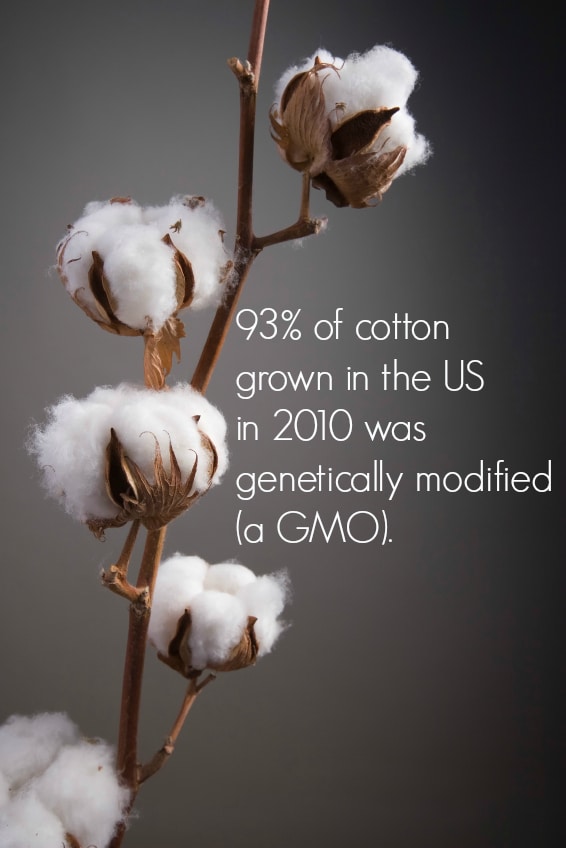
Did you know that 93% of cotton grown in the US in 2010 was genetically modified (a GMO)? While many of us are diligently trying to buy non-GMO products, most are unaware that almost every piece of clothing, bedding, towel, or cotton swab is made with GM cotton. Although I’m not aware of any studies which prove that GMO cotton is harmful when it comes in contact with the skin, I’m concerned. The skin is our largest organ and can absorb many things through simple contact. Does GMO cotton have a negative effect on the body? What about lint floating in the air – if we breathe it in, is it harmful? The Organic Consumer Association warns that the new GM strains have not been properly tested for safety and environmental impact and may contain pesticides that can migrate to human skin.
Aside from the fact that most cotton is GMO, The Pesticide Action Network claims, “conventionally grown cotton uses more insecticides than any other single crop. Nearly $2.6 billion worth of pesticides are sprayed on cotton fields each year — accounting for more than 10% of total pesticide use and nearly 25% of insecticides used worldwide.
In the U.S. and around the world, pesticides used on cotton — even when used according to label instructions — harm people, wildlife and the environment. Many of the most hazardous pesticides on the market, including broad spectrum organophosphates and carbamate pesticides, are sprayed on cotton fields.”
Pesticides have been linked to a wide range of diseases including asthma, autism, learning disabilities, birth defects and reproductive dysfunction, diabetes, Parkinson’s and Alzheimer’s diseases and several types of cancer.
And if all of this wasn’t bad enough, during the conversion of conventional cotton into clothing, numerous toxic chemicals get added at each stage – silicone waxes, harsh petroleum scours, softeners, heavy metals, flame and soil retardants, ammonia, and formaldehyde – to name just a few. (click here to read the details about the chemical processing. I was shocked!)
Now for the good news! The Organic Consumer’s Association states, “organic farming methods use natural fertilizers, like compost and animal manure, that recycle the nitrogen already in the soil rather than adding more, which reduces both pollution and N2O emissions. Organic cotton is often hand-picked, especially in developing countries, without the use of defoliants, machinery, or chemicals. Hand picking also means less waste.”
Organic clothing manufacturers do not add petroleum scours, silicon waxes, formaldehyde, anti-wrinkling agents, chlorine bleaches, or other materials. They also use low-impact dyes, earth clays and organic color-grown cottons. These more natural alternatives are used to reduce the toxic consequences of conventional cotton fabric manufacturing.
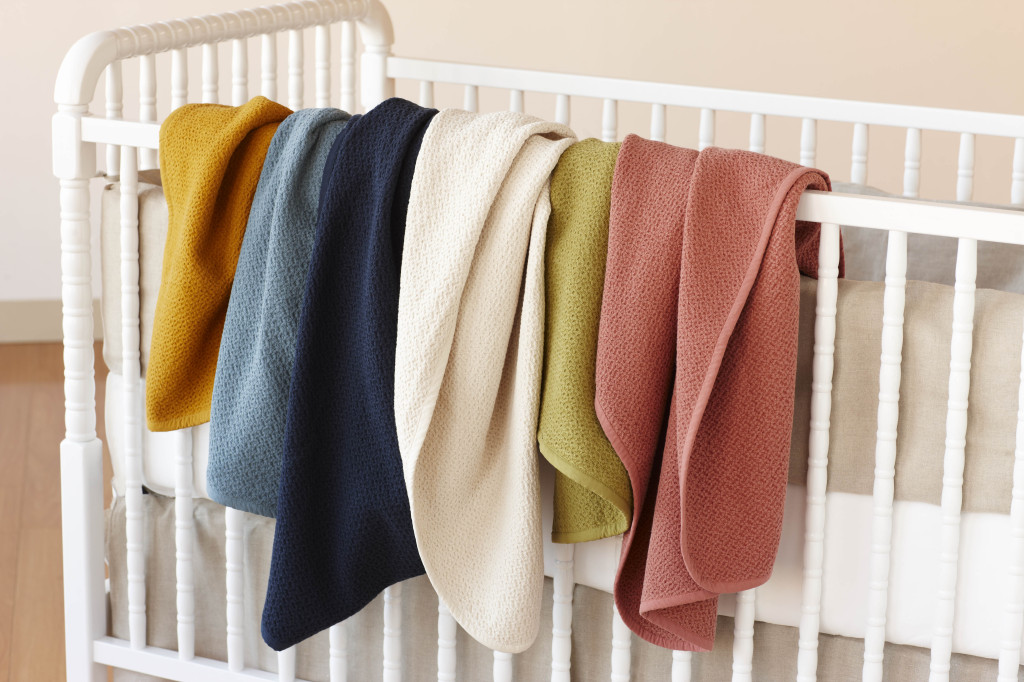
So what do we do? Organic cotton clothing and textiles can be very expensive and not many of us have the means to easily replace all conventional cotton with organic cotton in our household. Once again, my suggestion is to start small. When it comes to changing your diet to organic, unprocessed foods, I always say, “Make one change a week” so for bedding, towels, clothing, etc. I challenge you to “Make one change a month”. I’m starting with our bedding and towels. I found Coyuchi many months back and started with a few new pillowcases and a blanket. A couple months later, I purchased organic sheets. Soon, I plan to start replacing our conventional towels with organic ones (it might be one towel a month, but I’ll slowly get things switched over!).
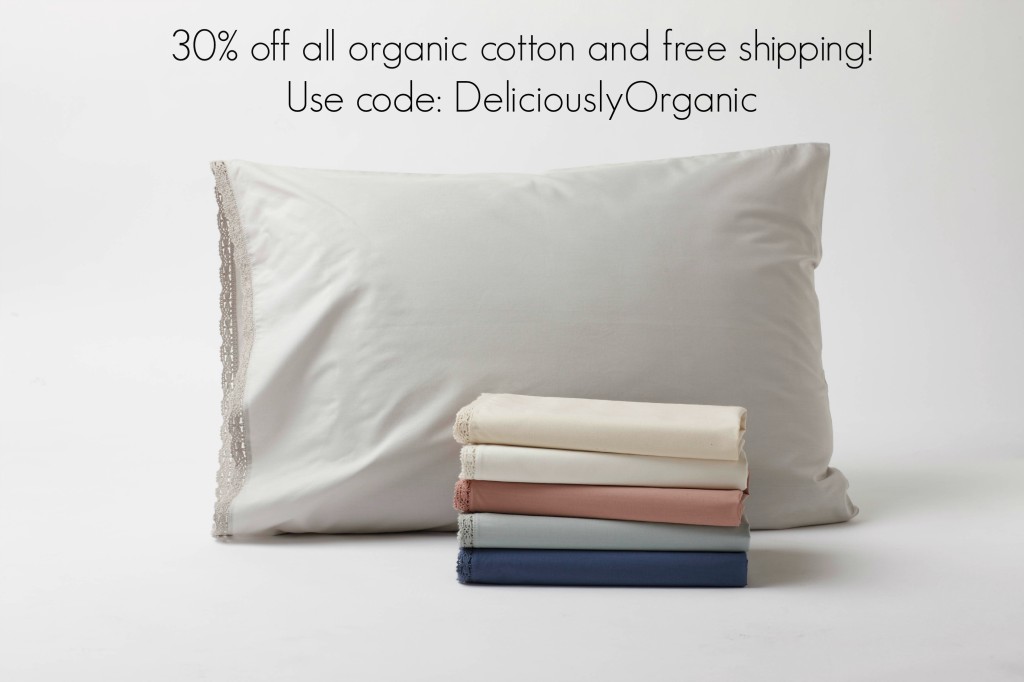
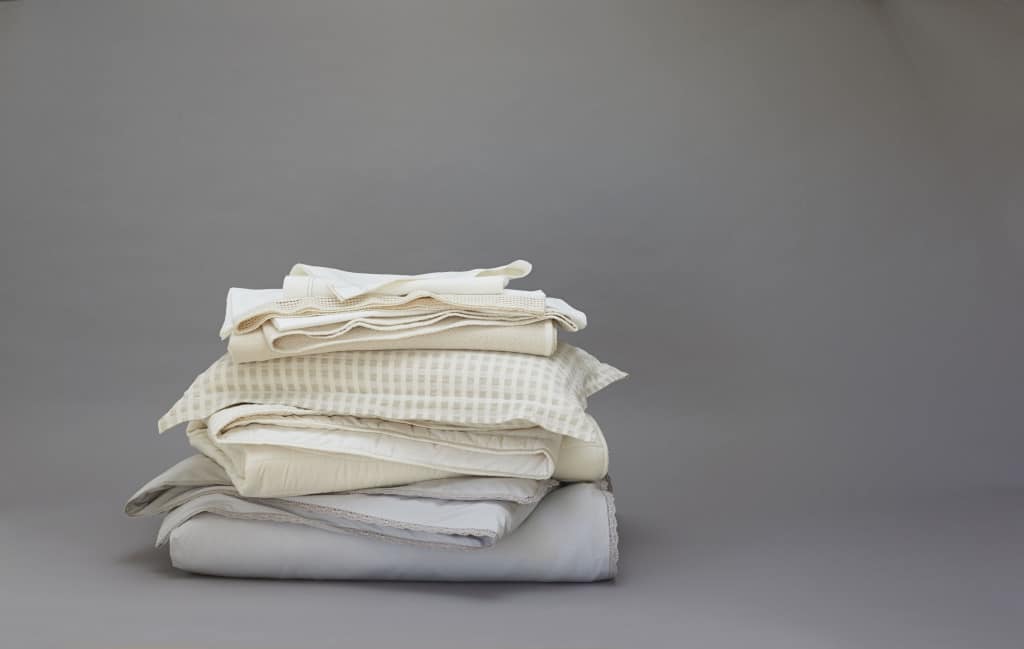
Coyuchi sells all-organic bedding, including blankets, pillows, sheets, towels, and much more. Maybe you can start with two pillow cases, or some towels. Start somewhere, and slowly begin to look for alternatives to conventionally-grown cotton. It’s healthier for the environment and may be healthier for your family.
When I decided to write this post, I contacted Coyuchi to see if they could offer a special discount for you. You’re in luck! This week, they’re having a 30%-off sale for organic cotton and they’ve offered free shipping for any size order for all Deliciously Organic readers! Use the code: DeliciouslyOrganic
Here are a few more economical options to start with:
220 Percale Pillowcases
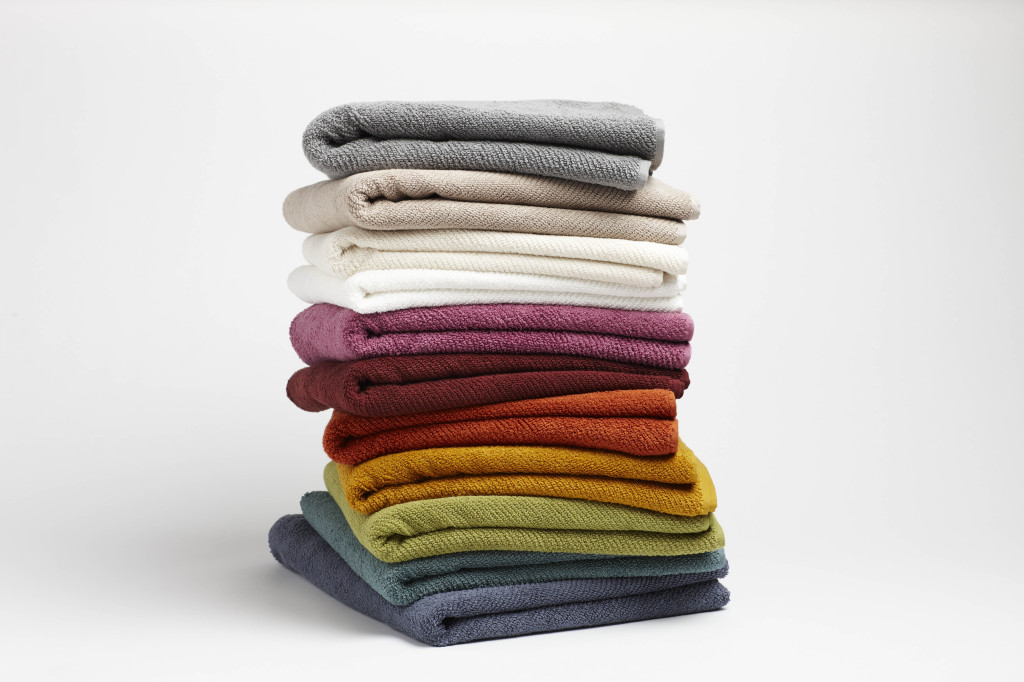
Air Weight Bath Towels
Organic Cotton Pajamas
Jersey Fitted Crib Sheets
What do you think about the chemicals and pesticides used in textile production? What product are you going to start with first – Pillows? Sheets? Towels? I’d love to know your opinion!
Full Disclosure: I discovered the online store, Coyuchi, many months ago and fell in love with their products and their mission. I contacted Coyuchi to see if I could help promote their product. They sent me a few products to sample. All thoughts and opinions are my own.


Pillows, sheets, towels…I’m starting with those pajamas!:)
Thanks for this post. Organic clothing has actually been on my mind lately and now I have some idea of where to start!
What about organic furniture, such as a couch and curtains and even carpeting?! I tried to do a search not to long ago and had the worst time! Even paint has awful stuff! Thank you so much for this article, this helps my search
I’m going to be talking about these exact topics in my upcoming “The Green Home” series on this site. It’s very difficult to find good products so I’m going to give you the info I found during my many hours of searching and trying different companies products. Stay tuned! 🙂
You are wonderful! Your effort is appreciated
Oh, I’m very much looking forward to that! If all goes well, we will start building a new home in the next month. As we’ve designed our home, trying to keep costs in check (we work for a non-profit now), trying to figure out what flooring companies are the greenest (and most affordable), what appliances are the most energy efficent, what is the best no-VOC paint, etc. is challenging. Plus, we are about 100 miles from the Dallas metro area which limits our choices more to the local area. Any info you provide will be helpful!
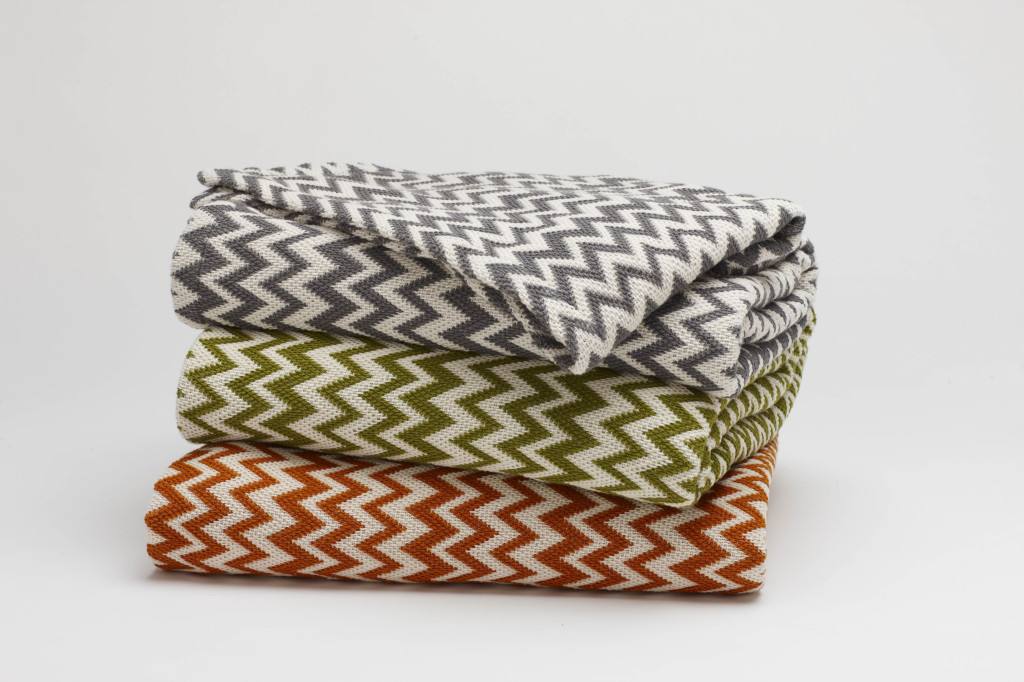
I love the subtle colours! I love the materials, they all look so touchable and so comfortable.
What about buying pre-owned clothing? Does washing have any effect on the chemicals, as in reducing them?
And buying used furniture: doesn’t outgassing, etc., decrease with age? (I know it has no effect on the dangers of lead paint..)
Thank you for the resource ideas and “permission” to take baby steps.
If you’re trying to avoid gmo cotton, then it depends on when the clothes were made, but it’s a great way to reuse and wear clothing that doesn’t have quite as many chemicals on them. Washing can have an affect, but I know that clothing that some chemicals are difficult to get out. Yes, outgassing decreases with age (I’m doing a whole post on that in a week or so!). I recently used Benjamin Moore Natura no-VOC paint and loved it! No smell at all, and it goes on beautifully! I’m going to write much more about “greening up the home” in future weeks, so stay posted! 🙂
I’ve been working on finding a better pillow. When I saw the picture I was hopeful that you were going to talk about organic pillows! Do you have any suggestions?
Coyuchi sells some amazing down pillows. I recently bought some organic wool pillows (actually very cool for the summers) and I really like them – they are a medium firmness: http://www.amazon.com/gp/product/B00AYGIQBA?ie=UTF8&creativeASIN=B00AYGIQBA&tag=deliciorgan03-20
My friend loves her natural latex pillows (made from the latex from rubber trees) so that’s another good option:http://www.amazon.com/gp/product/B00382XCL6?ie=UTF8&creativeASIN=B00382XCL6&tag=deliciorgan03-20
All your ideas are great and I follow them for about a year, but I have just one question regarding this last topic. Yes, you can buy organic cotton, but how you can be sure the pollen from GMO fields not crossing with organic? If one farmer has organic fields, but neighbour is growing it with GMO or pesticide, then no point to buy any local bedding, cloth, etc. What do you think about it Carrie?
Cross-contamination can happen so there’s always a chance that any organic food/clothing you purchase (that’s also grown GMO) could be contaminated. But for cotton, the amount of chemicals that goes into the processing is enough for me to switch to organic.
Hi Carrie, Thanks for your reply on info for local eggs. In reading it, I read this entry, and somewhat impulsively (but not regretfully!) bought a bunch of new linens. In explaining how this happened to my husband 🙂 I discovered he knows your husband. Small world!
What a small world! Are you all military?
Hi Carrie, Is this discount still available? Please let me know. Thanks 🙂
It’s not, but I’m hoping we can offer another discount with Coyuchi soon!
Thank you….. I will be patiently waiting 🙂
I am trying to find organic , non-GMO cotton batting t creating lap quilts. Does anyone know who sells that?