Last Updated on September 9, 2026 by Deliciously Organic Editor
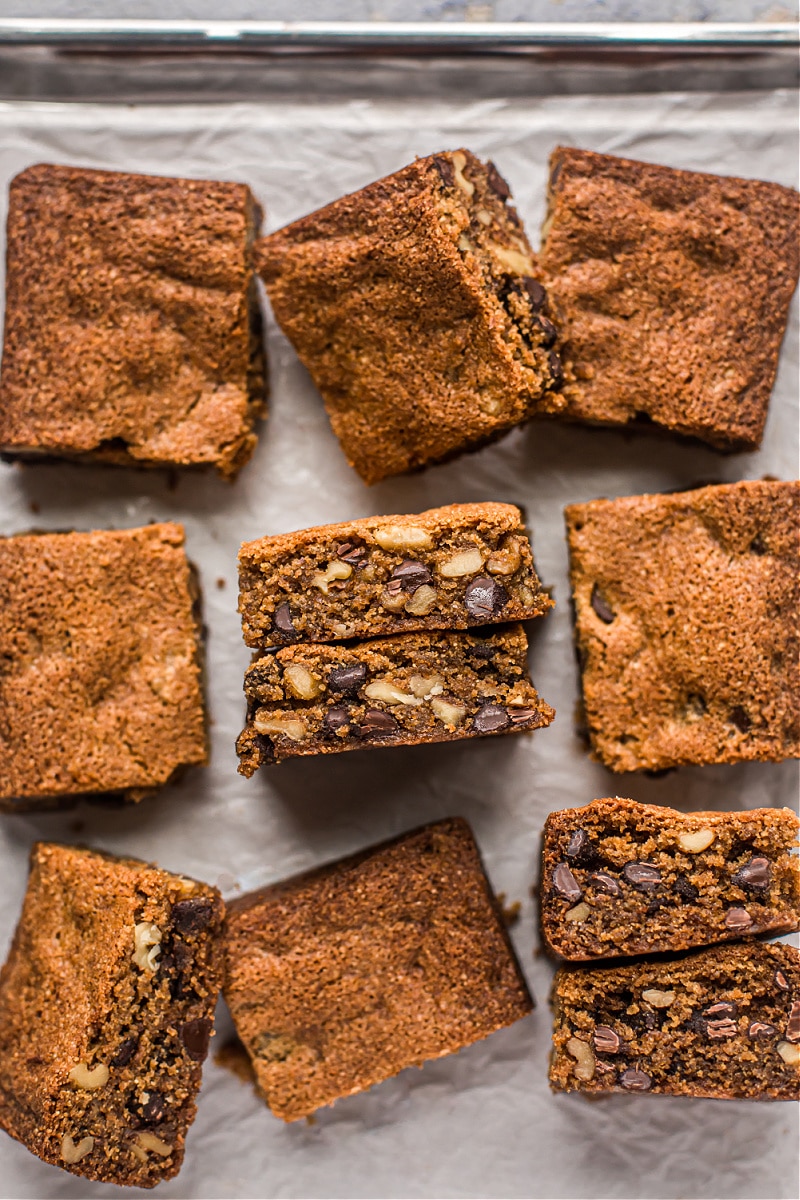
Chocolate Chip Walnut Blondies is a fun one-pan dessert that everyone will love!
Let’s talk about sugar for a minute. . .
Sugars can cause confusion and missteps when we cook and bake with unprocessed ingredients. First of all, let me state that sugar is sugar. Sweeteners of any form will cause insulin levels to rise (some a lot, some a little) so we should always use them in strict moderation. In fact, overconsumption of sugar has been linked to heart disease, diabetes, auto immune diseases, etc. So, it’s a good idea to use wisdom in choosing sweeteners and how often to consume them.
When cooking and baking with less-processed sugars, it’s important to keep in mind that the sweetener might lend a bit of extra flavor to the dish. For instance, maple sugar may add a slight maple flavor to the end product. Also, many of the sweeteners listed below will lend a slight blond color to the food, so if you’re making a cake you’d like to keep as white as possible, use a sweetener like honey instead of sucanat.
Here are some of my favorite sweeteners:
Raw Honey
Raw honey is a natural sweetener that doesn’t cause a significant rise or fall of blood sugar levels. It’s best to buy raw honey because it contains beneficial enzymes which are lost during processing and filtering. Honey is best used in dishes that don’ t need to be heated. Raw honey has a glycemic index of 30. (Refined, pasteurized honey can have a glycemic index as high as 75! So if I can find raw honey, it’s always my preferred choice.)
Organic Whole Cane Sugar/Sucanat
Organic whole cane sugar is dehydrated sugar cane juice and contains many minerals. I like to refer to it as white sugar before it hits the factory. Whole cane sugar can be used in place of sugar 1:1 when baking and cooking. The rich molasses flavors do well in cakes and cookies or any recipe that would be complemented by a bit of molasses flavor. Sucanat has a glycemic index of 55.
Maple Syrup
Maple syrup is rich in trace minerals and is an excellent sweetener for baking or drizzling. Maple syrup has a glycemic index of 54.
Maple Sugar
Maple sugar is made by dehydrating maple syrup. The result is sweet, blond sugar crystals. It’s one of my favorite sweeteners, but is a bit more expensive, so I only use it occasionally. It’s great for chocolate desserts. I had trouble finding the glycemic index value for this sweetener. I would assume it’s close in value to maple syrup.
Date Sugar
Date sugar is 100% dehydrated dates ground into small pieces. Date sugar doesn’t dissolve in liquids, so it’s better utilized for baked goods. I couldn’t find the exact glycemic index of date sugar, but regular dates have a glycemic index of 42, so that’s a pretty good number to use.
Coconut Palm Sugar
Coconut sugar is a traditional sugar made from the sap of coconut flowers. It’s boiled down to create either dry sugar blocks, a soft paste, or a granulated form. Coconut sugar has a glycemic index of 35.
Molasses
Molasses is the by-product from the production of refined sugar. This rich mineral- and nutrient-dense syrup is slightly sweet and best used in baked goods. Molasses has a glycemic index of 55.
Muscovado
A great option when you want a brown, moist sugar. Muscovado has quite a bit of molasses in it, so it’s great for a richer flavor.
Stevia
Stevia is a sweet powder that comes directly from the stevia plant and has become quite popular in the last few years. It’s 300 times sweeter than sugar, so you need only a small amount. It dilutes well in liquids and is perfect to sweeten hot and cold beverages. Stevia leaves are green, so make sure and look for green stevia powder. If it’s white, it’s probably been bleached. Stevia has a glycemic index of 0.
Sweeteners to Avoid:
It is best to avoid refined and chemically made sweeteners such as agave, white conventional sugar, xylitol, corn syrup, etc. Shop wisely. Many of the a raw sugars on the market are simply white sugar with a bit of molasses added back to give them a brown color. Just check the labels, as we discussed in this post.
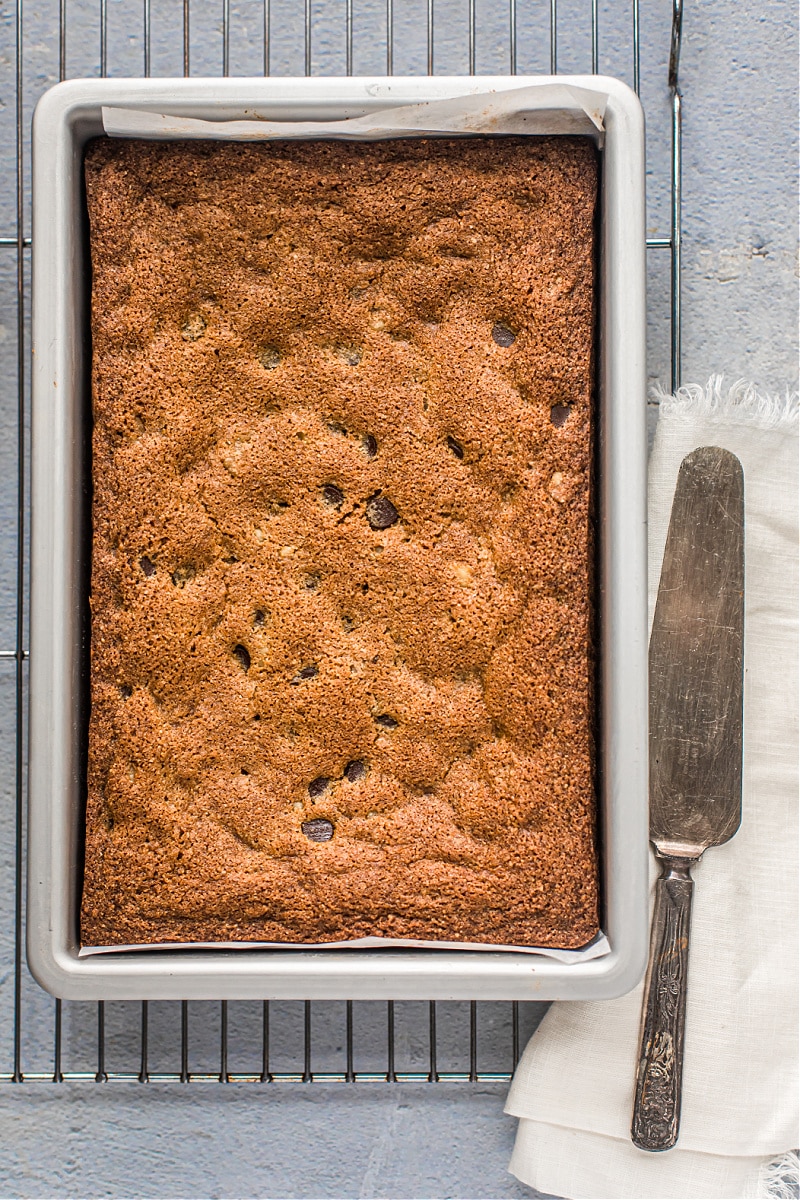
After discussing different sweeteners, let’s get down to using some! I know I can always depend on Ina Garten’s recipes. They’re full of flavor and easy enough for the home cook. I adapted her Chocolate Walnut Blondie recipe from her book, Foolproof, to use less processed sugar and grain-free flours.
I tested them out on a group of kids and they all came back for seconds. Not one asked about the glycemic index, though. 😉
PrintChocolate Chip Walnut Blondies (Grain Free)
Adapted from Barefoot Contessa Foolproof
Ingredients
For the batter:
- 1 cup unsalted butter, room temperature
- 3/4 cup muscovado sugar or a very dark brown sugar
- 1/4 cup coconut sugar
- 2 teaspoons vanilla extract
- 2 large eggs, room temperature
- 2 cups almond flour
- 2 tablespoons coconut flour
- 1 teaspoon unflavored gelatin (I prefer Great Lakes or Bernard Jensen)
- 1 teaspoon baking soda
- 3/4 teaspoon Celtic sea salt
- 1 1/2 cups chopped walnuts
- 10 ounces bittersweet chocolate chips (I used Enjoy Life)
Instructions
- Preheat oven to 350ºF and adjust rack to middle position. Oil an 11×7-inch baking pan and then line with unbleached parchment paper with the sides hanging over (this will enable you to lift the bars out of the pan when they’re cool).
- Place the butter and sugars in the bowl of a standing mixer. Mix on high, using the beater attachment for 3 minutes, until light and fluffy. Scrape down the sides of the bowl. With the mixer on low, add vanilla extract and then eggs one at a time. In a medium bowl, sift together the almond flour, coconut flour, gelatin, baking soda and sea salt. With the mixer on low, slowly add the flour mixture to the butter mixture. Fold in the walnuts and chocolate chips.
- Spread the batter evenly in the prepared baking dish. Bake for 30 minutes or until a toothpick comes out clean (the toothpick might have some melted chocolate on it, but it shouldn’t have any wet batter). Don’t overbake! Cool for 30 minutes. Hold onto the parchment paper and gently lift the bars out of the pan. Cut into squares. Serve.
Nutrition
- Serving Size: Makes 12 square bars

//

Love how you make such beautiful and GOOD for us food! You get my nomination for mom of the year. 🙂
You are too sweet! Thank you, Amanda.
These look delish! Would it have much of an affect on the recipe to leave out the gelatin?
The gelatin helps to act as a binder for the grain-free flours. You can omit it, but the bars will probably be more crumbly than intended.
Thank you so much for this series….its so helpful!!!!! Also, if i’d use whole wheat flour would you still need the gelatin in the recipe? Thanks again
You’re welcome! If you’re using whole wheat flour, you can omit the gelatin.
can’t wait to try it…what other binders could you use? more eggs? I don’t have gelatin and kind of want these today 🙂
Does gelatin still come from bones and hooves?
Gelatin from good sources such as Bernard Jensen and Great Lakes make their gelatin from the collagen in cows. It’s a good source of protein, supports skin, hair and nail growth, supports joint health, etc. I like to use it in some of my grain-free baking because it acts as a nice binder (since grain-free flours don’t contain gluten) and it’s also a healthier option, in my opinion, than xanthan gum and other thickeners. Here’s an article with more info: http://www.westonprice.org/food-features/broth-is-beautiful
HOORAY!! I can’t thank you enough for the amazing service you provide. Also: thanks to your husband for his service, and to You again, for supporting him.
CR, AC1(AW), USN Retired
Thank you for the kind words! And, thank you for your service! 🙂
I had no idea you could use gelatin as a binder. Wow. You are amazing. Thanks!
I wondered what do you think about the issues described by some researchers in the field of neurochemistry: they say, basically, that when consuming stevia, the brain gets through the sweet taste message “energy in the form of sugar is coming”, but the energy doesnt come, which can actually, among other things, lead to weight gains, because brain analyzes the situation as starvation and starts to store for the worse time.
I read about it in an article in the NYT and the authors described impact of range of sweeteners on human cells. One of them said, that having done his research, he came to conclusion that he will avoid all sweeteners, because it is hurting human body. (Just to make sure, fruit in the form of fruit is not considered sweetener.)
I’ve read about this when referring to chemically made sweeteners such as corn syrup, splenda, etc. but not when referring to all unprocessed sweeteners such as honey and maple syrup. I do agree that we should strictly limit our intake of all sugars. To answer your question – fruit in the form of fruit is a sweetener/sugar. Eating fruit in it’s whole form is much better than just eating certain parts because the skins, flesh, etc. all work together to enable the body to digest the fruit. If you know where that NYT article is, do you mind sharing the link? I’d love to read it!
http://www.nytimes.com/2011/04/17/magazine/mag-17Sugar-t.html?pagewanted=all&_r=0
Ok – I want to make these today! Can I use sucanant for the brown sugar? it’s what I have on hand. :o)
Thanks!
You could use sucanat mixed with a little maple syrup to add the extra moisture. I hope you like them!
I got that cookbook for my birthday – I’ll have to print this out and include with the cookbook’s recipe.
Thanks for doing all the hard work for us!
PS – I am really enjoying this series of posts.
Yay! It’s a great book, right? We made the candied bacon over Christmas and we devoured them in minutes! 🙂 I’m glad you are enjoying the posts. Thanks for the feedback!
These look absolutely delightful and I thoroughly agree with and enjoyed your discussion of natural, unprocessed sweeteners. All things in moderation. Lots of blessings to you, Kelly
Thanks, Kelly!
Hello,
Great looking recipe! I’m confused about the sugars- I thought whole cane sugar is rapadura and it is barely processed where sucanot is a more processed version and not as desirable. What are your thoughts on this? Thanks!
A few years back, sucanat wasn’t a good source, but that has changed. Sucanat and rapadura are basically the same thing. It just depends on the company you buy from whether they call it sucanat or rapadura.
Great explanations and thanks for the GI for each. 🙂 We really like coconut palm sugar.
Where, oh where, can I find GREEN stevia? I use it all the time but have never thought about it being bleached. Yuck!
Frontier Herbs makes real stevia. It’s simply dried stevia leaves ground into a powder. You can find it on Amazon or maybe at your local health food store.
Do you have a rule of thumb when replacing sugar in recipes, as far as the ratio of specific alternative sweetener to add in relation to the amount of sugar/brown sugar called for?
Lately, I use 1/2-3/4 the amount called for if it’s a dry sweetener. I’ve found this approach usually doesn’t change the outcome of the recipe. If I want to replace a liquid sweetener for a dry sweetener, I’ll use 1/2 the amount called for and then add a bit more flour to make up for the wetness of the sweetener. For example: if a recipe calls for 1 cup white sugar, I’ll use 1/2 cup honey and then increase the flour by a few tablespoons.
Hey Carrie – I want to try substituting honey or maple syrup for the sugar in cookie recipes. Most recipes calls for creaming the butter and sugar first. If I’m substituting with maple syrup or honey, would I add that in with the butter and cream the two together? Or would I just cream the butter for a while, then add the liquid sweetener when I add the egg and vanilla extract? Thanks for your help, you’re such an inspiration!
When I make cookies using maple syrup or honey instead, I still cream the butter and sweetener together. I’ve found by doing this, I get the nice texture that the writer of the recipe was trying to achieve. I hope that helps!
Awesome and informative post!
Thanks, Rachael!
Is Turbinado sugar, aka Sugar in the Raw considered a healthier sugar option? I’ve been buying it thinking I’m doing a good thing and not buying processed white sugar, but I didn’t see it on this list, so now I’m not sure.
Sadly, turbinado is generally white sugar with a little molasses added back for color. If you want to make a small change, I’d give sucanat a try.
Well drat! I just opened a brand new bag of it. Oh well, I’ll use it up and then switch to Sucanat. Thanks for your help!
Actually, I may go with maple syrup. I live in maple syrup country, so local organic maple syrup is super easy to come by here!
So you want to avoid agave nectar? I didn’t know that! I love to use raw honey, its amazing! Not just good for a sweetener, but its an excellent cure-all!
I prefer to avoid agave. I really wanted to like agave and then I read exactly how it’s made. At least there are plenty of other wonderful, more-natural sweeteners out there! 🙂
Have you considered doing a Paleo cookbook? I’ve always enjoyed your recipes, but now that I am on the grain free/Paleo bandwagon (thanks to you, 🙂 ) I would love to see an all Paleo Deliciously Organic cookbook. Even if it was ebook format. Or have you done this and I missed it? Thanks for all you do.
Thank you for the kind words. I’m hoping that my next book is grain free/Paleo. I’m taking the steps to make that happen. We’ll see! 🙂
Love, Love ,Love this recipe! Thank you SO much! My kids and husband were in heaven!
Sugar is so bad for us and I am seriously treating it as poison and no longer consume in my diet. I do eat some fruit in the summer, that is, when fruit is in season. I try not to eat anything that is out of season.
I am truly not sure how you justify saying these sugars are okay in our diets.
I made these Sunday…they are so good!! I had to restrain myself to not eat the whole pan. LOL
My kids made these last night – they are absolutely awesome! Carrie – do you know how many carbs are in these? (I might not want to know!) Also – is it safe to assume the GI for muscovado sugar is similar to that of sucanat?
I’m so glad you liked them! I searched and searched and cannot find the GI for muscovado sugar. Yes, I’d say it’s probably similar to sucanat, but I I can’t say for sure. As for the total carbs, I don’t have that value. Sorry I couldn’t help a bit more! 🙂
These look/sound great, Carrie! Can’t wait to make them. 🙂
Hi Carrie,
This recipe looks great! I just have a question about honey. Is Raw honey safe to feed to kids since it is not pasteurized or filtered? I use honey a lot in baking instead of sugar.
Thanks!
Tiffany
From my understanding, you don’t want to feed honey to a child under the age of 1. But after their first b-day I started giving my kids raw honey. You might want to check http://www.westonprice.org for more detailed info.
If i wanted to use Whole Wheat flour, should i use the Whole Wheat Pastry Flour? I also have White Whole Wheat flour on hand. Also, how much would i use if replacing it for the almond/coconut flour?
Thank you for listing the glycemic index, that information is very helpful. What is the glycemic index of white sugar and corn syrup. I’d be interested to know the comparison.
How do you feel about coconut nectar?
I use it every once in a while and find it to be a good sweetener.
Why is xylitol a sweetener to be avoided?? I’m just not a fan of stevia! Don’t like the bitter after taste I get from it!
Here’s a great article about xylitol: http://www.curetoothdecay.com/Tooth_Decay/xylitol_tooth_decay.htm
I’ve made this recipe twice and both times the outer part came out very consistent with the texture of a cookie, golden brown, but inside was very oily and wet. My impression is that 1 cup of butter is too much for this recipe. Has anybody else had this problem?
Made them for our 2023 Easter after a 5 day liquid detox fast. What a reward! I will repeat it with 1/2 the choc chip and a little less sugar, though. Since cutting out sugar all sweets seem to be over the top for us.