Last Updated on February 27, 2026 by Deliciously Organic Editor
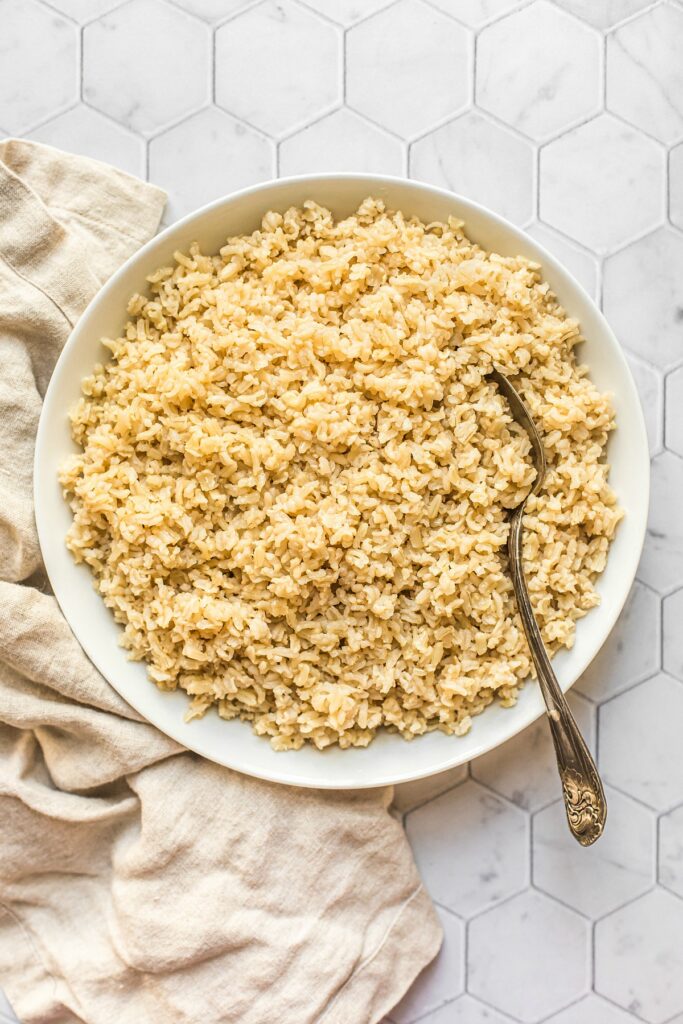
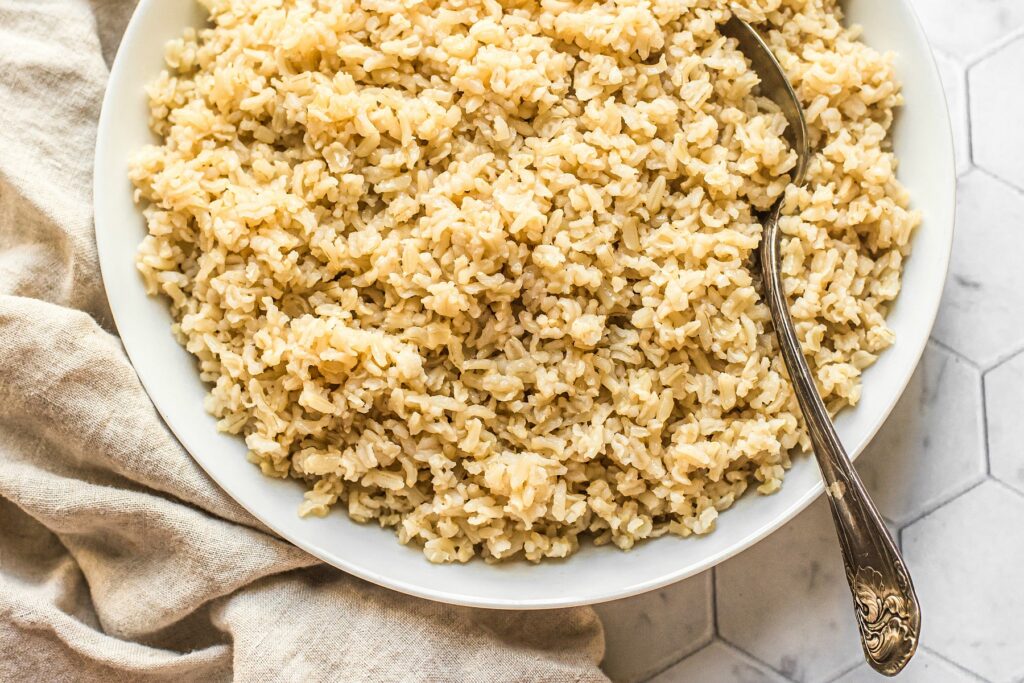
I’m often asked how to make soaked brown rice, so I wanted to share my very simple recipe with you today!
Why should you soak rice?
Humans have eaten grains, legumes, nuts and seeds for thousands of years. Traditionally, people soaked these foods before cooking them to promote easier to digestion. Somewhere along the way, we forgot about this important step and now consume these foods without the proper preparation.
All grains, legumes, nuts and seeds contain anti-nutrients that require neutralization. Nuts and seeds contain enzyme inhibitors that block digestion – potentially causing negative effects on the health of the body. Grains and legumes contain phytic acid that robs the body of important minerals like magnesium, calcium, zinc, copper and iron.
Over time, when we consume these foods without properly preparing them, serious health issues like leaky gut, irritable bowel syndrome (IBS), and autoimmune problems can arise.
Here at Deliciously Organic, I often talk about avoiding grains; but after you’ve taken measures to heal your digestive system, you can usually add healthy, soaked grains back into your diet with the help of your practitioner.
Soaking these foods may sound intimidating, but it’s actually very easy! It basically involves putting the food in a bowl, covering it with water, adding a neutralizer, letting it sit at room temperature, and then draining.
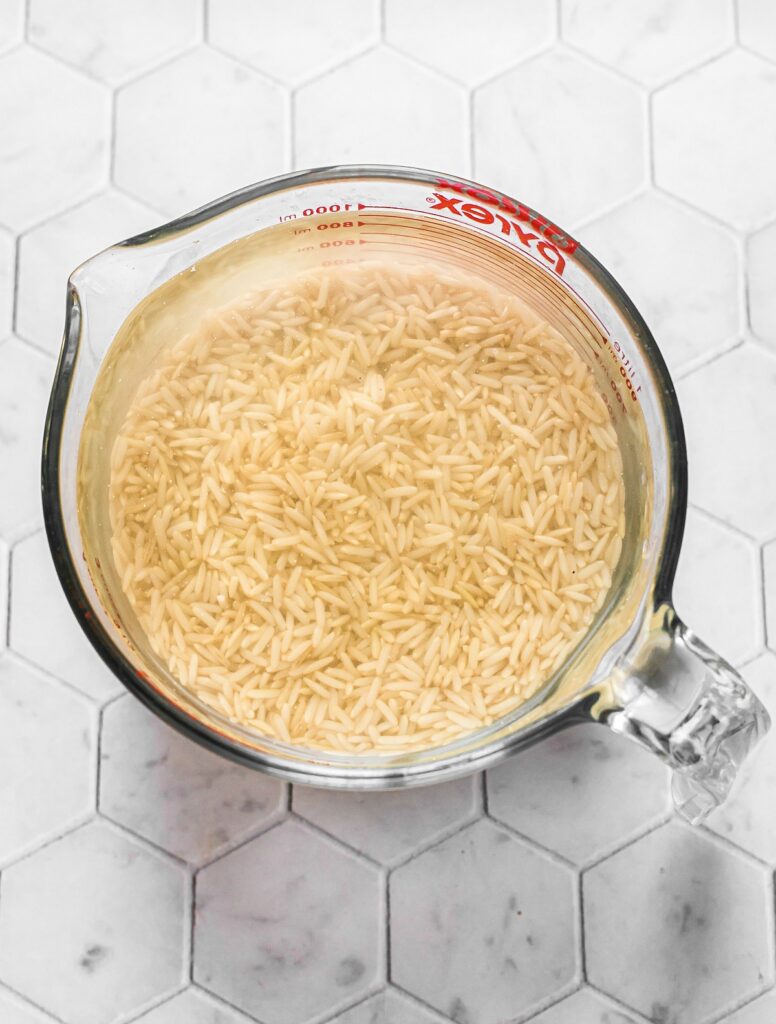
Rice can also contain arsenic but thankfully, soaking rice reduces levels by 80%! All you need to do is to put one part rice to five parts water in a large bowl, and soak for several hours. Rinse, and then cook in fresh water.
The key to this recipe is to remember to soak the rice the evening or morning before, and the rest is super easy!
PrintSoaked Brown Rice
- Prep Time: 10 minutes
- Cook Time: 1 hour
- Total Time: 1 hour 10 minutes
- Yield: 6 servings
- Category: Side Dish
- Method: Boiling
- Cuisine: American
- Diet: Gluten-Free
Ingredients
- 2 cups organic brown rice (I prefer Basmati)
- 1 tablespoon apple cider vinegar or lemon juice
- 6 tablespoons unsalted butter, divided
- 3 cups chicken broth or meat stock
- 2 teaspoons Celtic Sea salt
Instructions
- The night before, place the brown rice and apple cider vinegar in a large mixing bowl and cover with water (to reduce the arsenic, as mentioned in the post above, use five parts water to one part rice). Leave on the counter overnight. The rice can soak for up to 24 hours.
- Before cooking, drain the rice. Place 3 tablespoons of butter in a large pot and melt over medium heat. When the butter is melted, add the drained rice and cook, stirring frequently, until the rice is just slightly toasted, about 3-4 minutes. Add the broth and salt and stir. Increase the heat to high and bring to a boil. As soon as the mixture reaches a boil, put the lid on and reduce the heat to low. Cook for 45 minutes or until rice is cooked. Add the remaining 3 tablespoons butter and stir until melted. Season to taste with salt. Serve.
Photo Credit: Becky Winkler



Could any other vinegars be used? I’ve just made a large batch of pineapple vinegar, so I’m just wondering. Also, what does the vinegar do? Thanks!
Yes! Any kind of vinegar will work.
This sounds amazing especially since I was diagnosed with high levels of arsenic a few years ago! Thank you so much … a quick question though. Can this be used for other types of rice such as the mixed organic rice medleys that include the brown rice?
Yes, you can follow the same steps to soak the rice.
Is this necessary with all rices? My husband loves parboiled rice, (I know white rice isn’t great for you but I can’t get him to eat brown rice much) I usually rinse it but never thought that I would need to soak it.
Thanks!
Yes, this is necessary for all rice.
In your ingredients you say brown rice, but then in ( ) that you prefer basmati. Basmati doesn’t need to cook near as long as brown rice… but you don’t mention a different cook time for Basmati?
The vinegar what is the benefit of it is in a flavor for it…or???
Much deep thanks and have a great day.
It helps reduce the phytic acid.
What’s the shortest amount of time the rice can be soaked and still get this benefit? I ask because we don’t know the night before what we’re making for dinner. We typically decide late morning/early afternoon.
I wasn’t sure where to ask my question! After soaking brown rice, do I throw out the water and rinse? Then how much water do I add before cooking? After soaking the rice do I add the same amount of water as I did when I didn’t soak it? When I cook brown rice I without soaking I add one cup of water more than the cups of rice. Then I cook in a pressure cooker for 30 minutes.
I recommend following the directions as written in the recipe. Yes, you throw the water out after soaking. This recipe isn’t written for a pressure cooker, so I don’t know how the measurements would change.
see question above. I wasn’t sure where to write my question!
Important info, thanks Carrie! If I’m understanding your advice in the blog post, it seems that step #2 in the recipe is missing the RINSE rice after soaking step. Or did I misunderstand?
Also, just like Luna (above) I’m wondering how long rice has to be soaked to reduce arsenic and phytic acid? We also decide what’s for dinner on the same day so soaking overnight is highly unlikely.
Thanks!
It needs to soak for about 8 hours for the phytic acid and about 4 for the arsenic. You can rinse if you’d like, but it’s not necessary.