Last Updated on July 14, 2025 by Carrie Korem, FNTP

When I had my two girls, I didn’t know much about unprocessed, organic foods. I ate a “typical” American diet and rarely glanced at a list of ingredients on a label. That was the FDA’s job, right? Without knowing better, I assumed that food manufacturers were only allowed to sell food that was safe.
When my first daughter was born, I had a very difficult time breastfeeding her so I turned to canned formula just like every other mother I knew who wasn’t breastfeeding. When my second daughter was born we started her on formula from day one. I never thought to read the ingredients in those formulas. We trusted the manufacturers were making the healthiest possible alternative to breast milk.
Over the next few years, motivated by health issues my doctors weren’t able to solve, I learned about what’s in our food supply and I transitioned our family to an unprocessed, organic diet. One day when I was shopping in the grocery store I decided to walk down the baby aisle to read the labels of the formulas I’d fed to my girls. I stood there under the florescent lights at the military commissary and wept as I read. I had no idea I was feeding my girls large amounts of sugars and preservatives. Why hadn’t anyone told me what was in the canned formula? Why didn’t I ever think to read the labels? If I had known there were alternatives, maybe I would have made a different decision. But without the knowledge I didn’t even know there was a choice. My heart ached and I was angry.
This is a sensitive topic and I understand that. I am not trying to cause panic or make anyone feel guilty. But I’m a huge advocate for making educated decisions, especially when it comes to our health. Only when we know both sides can we make wise choices for ourselves. So before we begin, please know there is no judgment here. We aren’t pointing fingers or trying to sell you on one side or the other. I’m simply doing what I wish a friend had done for me: discussing the alternatives to canned infant formula. After reading this post, I hope you feel armed with knowledge so you can make the best educated decision for you and your baby.
I’ve wanted to write about formula for more than a year but didn’t feel like I had the expertise to address this topic. That’s where Bruce Bradley comes in. Bruce worked for more than 15 years as a food marketer at companies like General Mills, Pillsbury and Nabisco. In 2008 he left the corporate world to begin his own consulting business and wrote his first novel, Fat Profits. Bruce is one of the only former processed food marketers actively speaking out about concerns over the food we eat. I’m grateful for his willingness to share his knowledge with us today in this guest post.

As parents we want to see our children flourish. We want the very best for them, and we’re willing to make huge sacrifices to help them grow up to be happy and healthy adults. But let’s face it, all the decisions can be overwhelming and that’s especially true for new parents.
One of the first and most important choices new parents face is what to feed their baby. Ideally most newborns are breastfed, but as many new moms (and dads) quickly find out, breastfeeding doesn’t always go so smoothly. What should you do then? How good should you feel about most formulas? And what other alternatives can you pursue? While the truth is there’s no one right answer for every circumstance, hopefully with more information and resources, you can make the best decision for you and your child.
So how good of an alternative is formula feeding? Well, if you listen to the Big Three formula manufacturers (Mead Johnson—Enfamil, Abbott—Similac, and Nestlé—Gerber), you’d think it’s excellent. Frequently these companies run advertisements like the one below which do everything but say their formula is as good as breast milk.
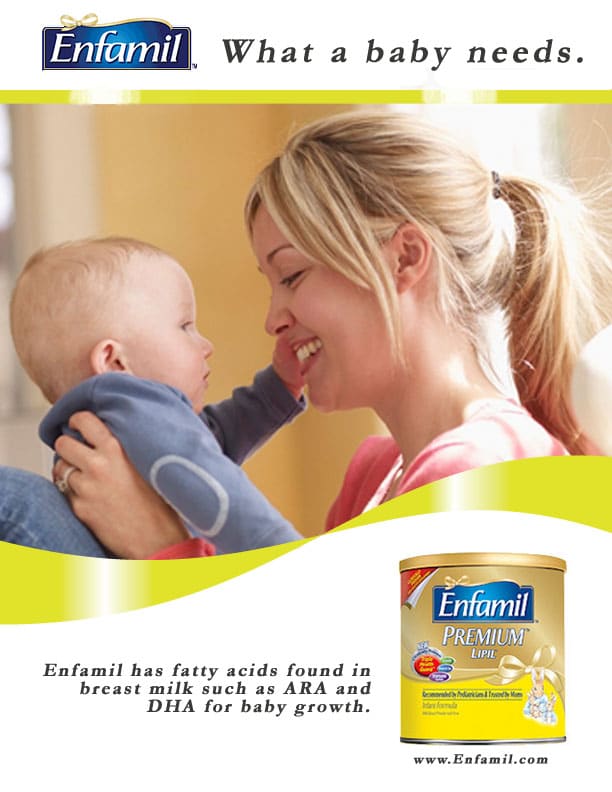
These companies also spend millions of dollars to get medical professionals endorsing their products via sampling programs in doctors’ offices and hospitals. But there’s a pretty simple fact that formula companies ignore when they promote and advertise their products, but will freely admit when asked directly in interviews. “Breast milk is the gold standard; it’s the best for babies,” says Christopher Perille, a spokesman for Mead Johnson.
Yes, from reducing ear infections, asthma, and digestive problems to even posting slight improvements in I.Q., breastfeeding is best for your child. Breastfeeding also has health benefits for mothers like reduced incidence of diabetes, obesity, osteoporosis, and even some cancers. (For more information, visit The World Alliance for Breastfeeding Action’s report, The 21 Dangers of Infant Formula)
But if you choose to formula feed or have difficulties breastfeeding and feel forced to look at other options, are all formulas created equal? The sad truth is, “no.” And while you might think there are lots of good formula options on the market, you might be surprised for several reasons:
- GMOs: Unfortunately the same food labeling laws that allow GMOs to lurk in most of our processed foods also allow them to hide in baby formulas. If you’re trying to keep your child away from genetically modified ingredients, then definitely choose a formula labeled “organic.”
- Growth Hormones: Since most formulas are made from cow’s milk, many parents are also concerned about the controversial growth hormones (rBGH / rBST) that are used by the U.S. dairy industry to increase milk production in cows. You might think formula manufacturers would take extra precautions to protect the health of infants, but you’d be wrong. From my research, all the major non-organic brands of formula use milk from cows treated with growth hormones.
- DHA/ARA: Since 2002, most manufacturers have fortified their formulas with DHA/ARA, naturally occurring nutrients in breast milk that aid brain and eye development. So what’s the problem? The DHA/ARA used in almost all formulas is made from laboratory-grown fermented algae and fungus that’s processed using a toxic chemical called hexane. Furthermore, a Cornucopia Institute report has determined fortified DHA/ARA “are structurally different from those naturally found in human milk” and may have no benefit to the babies consuming them. Unfortunately many organic brands of formula use these questionable DHA/ARA nutrients, so they are very hard to avoid.
- Preservatives: Sadly many of the more popular baby formulas use preservatives. But what’s so surprising is many organic brands have some preservatives in them as well. The Cornucopia Institute recently exposed the use of synthetic preservatives in many organic formulas “to prevent the oxidation and rancidity of the controversial patented supplements DHA and ARA.”
So are there any commercial formula options that pass all the above criteria? In the Cornucopia Institute’s online guide on formulas Baby’s Only Organic is the only brand that’s GMO/hormone free and doesn’t use the suspect DHA/ARA blend described above. However, there are a couple of questions that frequently come up when consumers inquire about Baby’s Only Organic formula. First, since it’s described as a toddler formula people wonder if it’s okay to use as an infant formula? According to its manufacturer (Nature’s One), Baby’s Only Organic formulas “meet the nutritional requirements of the FDA’s Infant Formula Act.” However since Nature’s One wants to encourage infant breastfeeding, it doesn’t promote Baby’s Only Organic as an infant formula. Second, Baby’s Only Organic uses brown rice syrup and older versions of its formula were found to contain elevated levels of arsenic due to environmental contamination issues affecting rice. Nature’s One has addressed this issue and Consumer Reports has confirmed that Baby’s Only Organic formulas have undetectable levels of arsenic.
Who knew choosing a baby formula could be so complicated? If this information has you more determined than ever to breastfeed and you’re looking for additional resources to help you succeed, The International Lactation Consultant Association provides excellent support and assistance for nursing mothers.
If you’d like to look into alternatives to breastfeeding or canned formula, the Weston Price Foundation has some great recipes for making your own homemade baby formula and tips on how to fortify canned formula. They also include a nutrient comparison chart and other tips on how to feed your baby a nourishing diet. In fact, in their price comparison, they show that it’s actually cheaper to make your own formula than it is to buy it from the store. It’s a great alternative – one I wish I’d known about when my daughters were babies.
Here are a few other great resources:
Super Nutrition for Babies
The Nourishing Traditions Book of Baby and Child Care
Weelicious – Catherine has lots of great homemade baby food recipes.
Bruce Bradley’s blog – to learn more about the tricks, traps and tools Big Food companies are using to get you eating more processed foods.
If you know of further resources, please share them in the comments below.


Thanks for writing about this! I don’t have children yet, but when I do I want to adopt at least some of them so this is something I have thought a lot about. Not a lot of options at the moment, but I hope that changes by the time I decide to have children in (not too incredibly near!) future.
It is possible to induce lactation and breastfeed adopted babies with the help of a skilled lactation consultant. There is also the option of sites like Human Milk 4 Human Babies and Eats On Feets to find donor milk. 🙂
Hollie changed our daughter’s life literally. I highly recommend this for your child. It is simply the best. We buy from http://www.organicbabyfood24.com. A million times better than anything you can buy on American soil.
Such great information! I am an extended breast feeder, but love to know there are safe and healthy options!!
Thank you so much for this post. Although I don’t have any kids just yet, most of my friends either have little ones or are pregnant. What to feed them has been a popular topic of conversation, especially since they know I have a health food blog. And while I can recommend good resources for making your own baby food, I didn’t have anything on baby formulas. Passing this post on to them.
I would like to share with your readers that exclusively pumping and offering your baby expressed breast milk is yet another option when breastfeeding does not work out. It’s an option I had to discover on my own and am so glad I did!
I don’t have children yet either but I have always wondered if there are other alternatives for parents. I plan on reading the Healthy Baby Code when it comes time to plan a family.
Like you, I had a incredibly hard time breastfeeding. And at the time, didn’t do enough research when deciding on formula. I seem to almost have the same exact story as I lasted 5 months nursing with my daughter along with supplementing formula after every feeding since I didn’t produce enough milk. I gave up after 1 month with my son. I couldn’t take 45 minutes for each feeding with a 3 year old running around. I can only hope the choices I’m making now with my kids diet will help with the bad choices I made before. And it is infuriating what these companies can get away with. But in their eyes, I guess there is nothing wrong. Which is even more disturbing.
Knowledge is power, and with our third child on the way, I want to make sure we are doing as much as we can to keep ourselves & our children healthy and toxin free. Thank you for your amazing blog. I look forward to reading Mr. Bradley’s book.lO
Thank you so much for writing and posting this article! I primarily breastfed my son until he was 9 months old and self-weaned. However, at around 4 months we started supplementing with a bottle or two of formula a day, at the recommendation of our pediatrician, because our son seemed not to be getting enough breast milk (I produced very well. He was a voracious eater and has been in the 95+% across the board almost since birth). I really wish I had known about this, especially how to make your own formula at home to supplement. Glad to have this knowledge for baby #2!
I breastfed my daughter for 11 months (when I got sick and my supply ran low) and then used Baby’s Only Organic formula until switching to organic grass-fed whole milk. This took a lot of (maybe obsessive, new mom 😛 ) research to find options and information. I wish there was more information available supporting these healthier options! It is difficult being an outsider when you don’t do the “normal” things, and even more difficult when you don’t know a lot about it.
Thanks for the wonderful, valuable information!
Holle is the best, closest to natural milk formula I’ve tried. No chalky, artificial smell, great formulation. All other major brand formulas we tried literally smelled like rotten eggs, or extremely chalky. I cringed at the smells. I had the hardest time giving those disgusting smelling formulas to my new born. But until I found Holle I had no choice. We found it on: http://www.organicbabyfood24.com
I don’t know a lot on this topic, but its something I have always wondered about! Thanks for this post!
I breastfed both my kids until they were 2 yr. old. I’m so glad I never had to turn to formula! It saddens me that there is only one “safe” formula on the market. 🙁
Thank you for writing this post in such a friendly easy manner. People need the facts, but not scare tactics. I will share this post with a few young moms I know.
Great info. We do not have children of our own but many little ones in the family and more arriving every year.
Great read. I am pregnant with my first child now, and my hopes are to be able to breastfeed, but I know that it doesn’t always go as planned. I am really glad there are informational blogs like this out there to make me feel more at ease with trying to find a healthy and safe option.
I appreciate this post and information. I was pushed a couple of times with my First born to supplement and a couple of times I caved. Thankfully I knew better with my second and advocated for myself and my son to see lactation consultant when needed. I wish more moms would be supported and reach out for help with breast feeding-many a baby wouldn’t have to be on formula. I have heard of the Baby’s Only but did not know why it was referred to as toddler formula. I wish you would have brought up milk sharing and making your own formula from goat’s milk (more similar than cow’s milk) as options.
Wow. I knew it was probably bad, but I had no idea. I “had” to supplement for a few weeks with my first — we had an awful time of it, but he was nursing successfully by 12 weeks old — but fortunately have been able to breastfeed all three of my children so far (the youngest is 8 months). I’ve never been able to nurse past 11 months or so, since I’ve always been pregnant before their first birthday, but our pediatrician was okay with cow’s milk (we do raw organic) at that point. Still, this is good information if any future children struggle! Thanks!
I just saw the link to the Weston Price foundation. 🙂
Thank you for this. Radical breast surgeries will not allow me to breastfeed. Shameful that mothers believe that formula feeding vs. breastfeeding is an option. It’s not for me.
This link also has some relatively simple recipes for baby food using the Vitamix:https://www.vitamix.com/Find-Recipes/B/A/Baby-Food-Pur%C3%A9es
Thank you for this article. 10 years ago I had to have breast surgery and have not been able to produce enough milk to feed my little girls (now 7, 5 and 6 wks). My first two had milk issues and was on soy. With this baby I researched and found Baby’s Only organic lactose free. We’ve been using that with our last little girl and really like it. We’ve been blessed to have 2 very healthy, active and intelligent little girls. Knowing that my girls were missing breast milk we made it a point to feed them organic real food as much as we could. I can count on 1 hand the number of times my girls have been on anitbiotics. This year, so far, they have not missed any days of school. If it wasn’t for seasonal allergies I would say they were the healthiest kids I know. They are also id as gifted. Breast milk is the best, but for those of us who are unable to it is nice to know that there is something better out there. I’ve heard of making your own formula and will look into it. Thank you for this article. Those of us who use formula are often lumped as those that just don’t want to bother to give their kids what they need, far from the truth.
Thank you for a great post. One other thing to consider is the use of fluoridated water! Babies DO NOT need to drink fluoride! Mother’s breast milk has very very low, almost non-existent fluoride. I cringe every time I see a jug of fluoridated nursery water. Make sure to do the research if you are using powdered formula. http://www.fluoridealert.org/issues/infant-exposure/
Hello, I’m very happy for this article. I am TTC with the aid of a fertility drug because my body isn’t working the way it should. Since my growing desire to know whats in the food I eat, I’ve always known that if I ever had a baby, I would never buy pureed food from a store, that I would blend my own food without unnecessary additives and ingredients. It never crossed my mind what I would do if the unfortunate should happen that I would be unable to breastfeed, or at least most of the time, so I would love to know the alternatives to these formulas mentioned above.
I’m sorry you didn’t know about this sooner, but you are amazing for helping the rest of us.
Holle Organic Formula is made from grass fed cow’s milk. These cows are not treated with hormones/antibiotics and live a carefree life which aids in healthier milk production. Holle does not contain harmful ingredients found in most brands of baby formula in the US. It does not contain added fluoride, corn/rice syrup, chemical addictive’s,. GMOs, added sugars, DHA/ARA, preservatives, added colors and soya.
I highly recommend http://www.OrganicBabyFood24.com !!
I would love this book! I was just talking with a friend about formula who started supplementing. Emailing her this post!
Great information, thanks for doing the research for us!
My son was on soy formula from about 4 months, he wouldn’t breast feed. When I began my whole foods journey and found out how bad soy was, it really upset me. Here I thought I was doing the best thing for my son, he didn’t like “milk” based formula and was losing weight so the doctor put him on soy, which his tummy could accept. Anyway, thanks for the awesome post and the give away. :o)
Thank you so much for the great info! I used goat’s milk to supplement my second, starting when he was 9 months old, which worked well for us. Maybe it will be a good alternative for some of your readers?
I don’t have any information to add about this, but love the information. I will be sharing this in my mom’s group on Facebook and will pass it along to other new moms I know! 🙂
I saw your link on FB Carrie and bravo to you for bringing awareness to this. My biggest fear, 15 years ago (when I had my first) was that I wouldn’t be able to breast feed. The idea of giving my perfectly new being something processed scared me. I was fortunate and was able to breast feed all three of my babies. I did it until they were three. I really hope this article goes viral.
THANK YOU! So appreciate the info and links!
Thank you for the honesty and sensitivity with which you tackled this topic. This was worth reading. I have been able to nurse my three babies successfully, though not always easily, for which I am forever grateful. I do know that there are many factors and circumstances that influence the choices made regarding breast feeding and I am soooo glad to see more good information out there, because that always helps! I would highly recommend the website http://www.kellymom.com as an excellent, well respected source of evidence based information regarding lactation and breastfeeding as well as other related topics.
There’s a recipe in Nourishing Traditions, but I’ve never tried it.
I breastfed all of my previous five children, for at least year. But last year, with the sixth, I lost my milk at 6 1/2 months. I didn’t even own any bottles. My dear friend had used Baby’s Only and recommended it to me. It is wonderful stuff. I tried other organic formulas, but none of them were as good as Baby’s Only. We are using the LactoRelief formula.
I am curious, even though Babys Only is a toddler formula did your pediatrician say it was okay and how did your baby do? My son is having a rough time and I cannot breastfeed 100% we are on our 5th formula which is a hypoallergenic one. I would love to try this one but am worried about switching to another formula and him being miserable.
Yikes! I will definitely keep this in mind if I ever have another baby.
Don’t forget Nourishing Traditions recipe for homemade formula! Not everyone is able to nurse, no matter how hard they try. Though rare, it does happen for some people. It is very comforting to know that there is a healthy, whole foods options for mothers who need formula for their babies!
I formula fed all three of my kids and shudder to know what is in formula. My daughter even drank soy formula, and I used plastic bottles with at least two of them. Ugh. By the grace of God they seem to have turned out OK!
I didn’t realize that baby formula was that tainted with nasty stuff. I don’t have any children yet, so this is very good information.
Luckily I nursed my son until he was 28 mos. (that was 12 years ago). However, if I had not, I would not have known about any alternative to what was on the aisles in most stores. I was not yet aware of GMOs and didn’t realize our food was contaminated with them or how utterly abhorrent they were. I had not been ‘woken up’ yet. I really feel sorry for those who have no other choice and are not aware of what is in typical formula. Heck, goat’s milk would be better than that. Glad there is another alternative now, but how many hospitals are even going to tell parents that it is an option, especially if that hospital is given money to push regular formula? Our country is going down the tubes….
I’ve been using similac for two years and have just recently been looking for alternatives. My son was in the NICU for a month and the drs there and his pedi insisted that I even add it to my expressed milk. I wish I had this info then, I would have stood up for myself! We are in the process of eliminating it and your article comes at a perfect time. I appreciate the alternatives you share and just can’t believe how much the medical community pushes formula and pediasure type drinks, especially on the sickest kids!
Thank you for providing this information. I have granddaughters who are using formula and I will pass on this info to them. They is so much to learn!
Such great information! My children are young adults now but I love having information to share with young moms!
My first grandchild (a granddaughter) will be born next month. I am grateful for this article. Thank you for all the information!
What a great article! Ihave a 3mo I’m breastfeeding &it’s nice to know what some safe options are, if necessary.
I can only make about half to three quarters of the milk my kids have needed and it just disgusted me to give formula to my kids, but I didn’t see any other way based on the current circumstances. I would love to find another way for the next baby if I have the same supply problems!
I have heard good things about your book and would be interested in reading it
Sadly I don’t know of any other good resources on this topic. I was fortunate to breastfeed my 3 children, they never had formula. There is more and more info getting out there about our food supply, hopefully infant formula will get some of that attention.
This topic is entirely new to me and I appreciate the information.
Great topic, Carrie, and thanks for bringing in Bruce to talk about it. I totally agree that it’s about education and making an informed decision. It’s been an interesting journey as I investigate all sorts of medical and dietary questions throughout my own first pregnancy.
Unfortunately, I don’t know of other good areas to look into for more information about this. My best friend breast fed and went to tons of group meetings with the La Leche League (http://www.llli.org/), and they helped encourage her and provide her with tons of information!
Thank you so much for posting this and writing about it! I don’t have kids yet, but am so glad to be warned of this in case breastfeeding isn’t an option for me.
I don’t have kids but think a lot about options as I had a breast reduction. I am so afraid that I won’t be able to breast feed when that time comes. I had ways thought about making homemade baby food but had never really thought about the formula. Thanks for the article!
who knew there was arsenic in baby formula!!! that is just crazy!
This is all new to me – thanks for sharing!
This is so sad and disheartening. I breastfed my second child for 15 months. My first I had a hard time with latching, so I pumped.
I think a lot of people are ill informed. If I couldn’t pump, I most likely would have used formula not thinking what was in it. I wasn’t very diligent back then.
I nursed my first son for 4 months then used conventional formula. That was over 12 years ago. When I had my second son almost 2 years ago, I nursed for 9 months but had to supplement with formula due to my milk supply dwindling (I work full time and he liked to use his chompers, so I had to pump exclusively). After a ton of research, I decided on Baby’s Only and felt good about my choice. My son tolerated the dairy formula just fine. I would highly reccommend Baby’s Only for anyone who is considering formula.
Thanks so much for sharing this! I think it’s a very important topic. I also think that there needs to be more support out there for breastfeeding mothers. More studies need to be done on nursing and lactation so those of us who experience problems don’t just get a doctor who says “You just can’t produce enough for your child” without an explanation. I find it kind of sad that more studies have been done on erectile dysfunction than on lactation. **stepping off soapbox now** 🙂
Wow! It is so crazy what is actually in the formula. I don’t have any children of my own YET but when I do I will be reading the labels on everything that I feed them. Thanks for the post
This makes me so sad. I was born in the 80’s and my mom had me at age 42 and I know that she wasn’t able to breast feed so I’m sure I was put on one of those generic formulas you find in the store. My mom would be horrified if she looked at the ingredient list now. She’s a health nut and the reason why I was such a healthy child and now adult and it makes me angry that these formulas are allowed to be sold.
I wish I would have known this 13 years ago!!!
I was really fortunate that both my kids took to breastmilk. But I had no idea formulas were so awful!
I am blown away! I breastfed my babies most of the time, but if I were to be away from them for a long period of time, I would leave them with formula instead of pumping. Due to a condition I had, I had to stop breastfeeding my youngest early. I put him on formula not thinking to look at the label (it’s horrible that we even have to!) until he was having health issues. He had been 100% healthy up until this point. I was getting him the “sensative” kind. I thought I might try a store brand, but wanted to know if it was really just like the national brand. Thats when I saw HYDROGINATED OILS listed as one of the main ingredients!!! I wasn’t educated enough to notice any other ingredients, but I KNEW I didn’t want THAT in my baby’s formula.
Great info if it is absolutely necessary… As a Lactation Educator I hope that moms put as much effort into getting education, help, and support for successful breastfeeding as they do researching how to make “good” formula. You have what it takes mamas, don’t you forget it. Tap into your instincts and they will lead you in the right direction. 🙂
There is yet another alternative and that is breastmilk sharing. Many communities, thanks to social media, now have groups of women sharing their extra breastmilk with other moms who, for one reason or another can’t breastfeed their babies. Checking with local childbirth educators and doulas is a good way to see if these resources exist. I’ve donated my breastmilk to a couple moms and they were so thankful for the milk that helped their babies so much.
Thank you for posting on this! It is not an easy topic, especially when some of the medical community seems to think you’re crazy for discussing it – and some docs are just not breastfeeding friendly!
I so wanted o breastfeed but I could not. My milk would simply not come. I tried desperately for one month to pump, worked with La Leche League and a lactation consultant. Nothing. We were eating organic for a few years already but I never even thought about an organic formula because they only seem to promote the big names. I already have enough guilt of not breastfeeding and reading this now makes me feel even worse. I wish I had more guidance then. But hopefully my kids will not be harmed in the long run. Since the day they could eat, I made all my food and it was all organic. And they have never had a sip of non organic milk. Heart-breaking. So glad you posted this!
I know of no other resources. I’m so glad I mostly breastfed for a year. I had some issues, but overall, I made it. I did use some formula. It’s so sad to think they even treat the tiniest ones this badly.
I formula fed both my children, but know for SURE that if any more babies are in our future, we will NOT be using the formulas that we have before! How horrifying!
I don’t have kids yet, but The Healthy Baby Code is a source I am interested in.
Good info!! Wish I had known of a better alternative than formula 🙁
In general recommendations you find warnings against saturated fatty acids and promotion of mono- and poly unsaturated fatty acids. But infants within the first year of life have a metabolism different to the ones in adults and older children. Fatty acids in human milk are mostly saturated. To be close to composition in human milk and also to meet legal requirements Holle has to use palm oil in the fat mixture in the Holle infant formulas. Palm oil is one of very few vegetable oils rich in saturated fatty acids. Most other vegetable oils are rich ins mono- or poly unsaturated fatty acids. Using palm oil in the mixture with rape seed oil and sunflower oil, we have a good profile of fatty acid, meeting the infant’s nutritional requirements.
You will not find a better brand of formula then Holle. We bought ours from http://www.OrganicBabyFood24.com
I don’t have kids yet, but when I do, this will be something I want to learn more about. Thank you!
I had to formula feed my oldest daughter, and I wish that I had this information before hand!
I appreciate the opportunity to receive a copy of this book. We have twins coming in my family via a gestastional carrier, so breastfeeding is not an option. Very interested in learning more to help these babies have the best start in life!
Dawn ^
Please know that there are ways to induce lactation as an adoptive mother. 🙂 For twins of course you will need something extra even if you are successful in lactating and for the there are organizations that can supply you with donor breastmilk if you choose. I encourage you to look into it. God Bless!
If there were a safe non-gmo option for a baby with milk protein allergy I would give my life’s savings for it. Sadly I’ve not been able to produce enough breast milk with either of my babies and must rely on formula. My 7 month old has a milk protein allergy leaving us with terrible options of Enfamil’s Nutramigen or Similac’s Alimentum 🙁 I am grateful that there is an option that does not cause him to break out in head to toe hives I just wish it was more natural and not so full of high fructose corn syrup.
Please refrain from informing me of all the things I could have done to stimulate increased milk production. I assure you I did them ALL!!!! Demand feeding every 2 hours (or more frequently). Frequent pumping, natural stimulants, prescription stimulants etc. It is a huge disappointment for me.
Ginny, have you tried Elecare hypoallergenic formula? It is more expensive but not milk based so we can at least miss out on some of the nasty milk stuff that’s in nutramigen. My son has a milk sensitivity. He also was covered in hives from head to toe and for months we were told he just had eczema and he’d have to outgrow it. Ugh! Anyway, He does okay on Nutramigen but I try to give him Elecare as much as possible, when we can afford it! My pediatrician gets free cans of it from the sales rep and I get about 2 free cans a month !
I’m going to try Baby’s Only Lacto Free one though and just see what happens !
Very helpful. Thank you!
Does anyone know of any other organic formula comparable to Baby’s organic that can be given to an infant as I am aware that Baby’s Organic promotes from 12 months and up?
i recently found out my son has a milk-protein allergy. He is 24 weeks old and I don’t know what I should do. The formula the doctors recommend are oil based or filled with corn syrup. Any suggestions?
Thank you for this! I was unable to exclusively breast feed my son since I did not make enough milk (yes I tried everything under the sun- I never experienced engorgement). Now pregnant with my second and more health conscience I definitely appreciate your post!
Hi Carrie
Baby’s only organic formula from Nature One is so much sweeter than Enfamil and even sweeter than my breastmilk! Is the sugar content in it too high for babies? I worry about introducing sugar so early.
Ѕаved as a favoгіte, I love your blog!
Thank you for the information about Baby’s Only Organic – I was confused when I saw the toddler formula label when I went to my local Sprouts! Thankfully I have a plentiful supply and have been able to continue BF and my workplace is super supportive BUT knowing there is an option out there I can feel good about if something were to change is huge!
BF is great unless you worked your butt off to increase you supply and it never worked. Also making your own formula is great unless you have a child who is allergic to milk and soy, then what……
Thank you for the article. I have a 7 month old child that is breastfed ans nourished according to the super nutrition for baby book (liver, meat, bone broth,fermented food). I’m going back to work soon and I need to start introducing formula to replace breastmilk since I don’t produce enough to pump it. Should I really go the formula route at this age? What should do?
Thanks
I have been feeding my daughter organic baby food. I wanted to go organic for the first year just to atleast get her on a good start. She is now starting “2nd foods” and when I went to the super market today I noticed that the variety of organic 2nd foods (of all organic brands, not just gerber) was much less than the non organic foods. Basically there were like 10 organic second foods to choose from and about 50 non organic second foods. I went on gerber and earth’s best’s websites and they just don’t make as much variety in the 2nd foods in organic as they do in non organic foods. So although I wanted to do organic I am also very concerned about my daughter experiencing a variety of foods so that she will not be a picky eater (like my husband who eats chicken for every meal!). So thanks for reading through this long question, basically I’m asking do you think it’s more important to go the organic route or is it more important to introduce her to a variety of foods early?
Amazing post… thanks for sharing with us!
I have my 8 months old baby girl on HIPP formula for almost 4 months now. At first i was panicking reading labels thinking about what if its not good for her.. Did a lot of research online and started getting it from online store. It turned out fine for me. My daughter has enjoyed feeding on the formula and is growing nice and healthy and I am satisfied.