Last Updated on June 2, 2026 by Deliciously Organic Editor
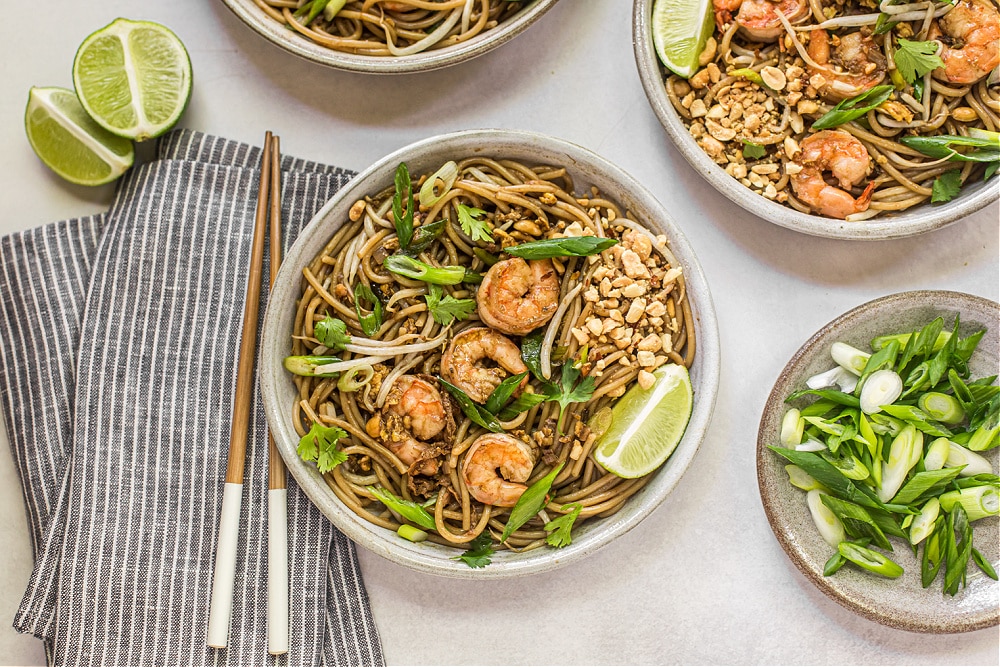
Pad Thai is a classic take-out favorite and is quite easily made at home. You’ll need to do a bit of chopping and mixing, but once you prep all the ingredients, it only takes 15 minutes to cook on the stove.
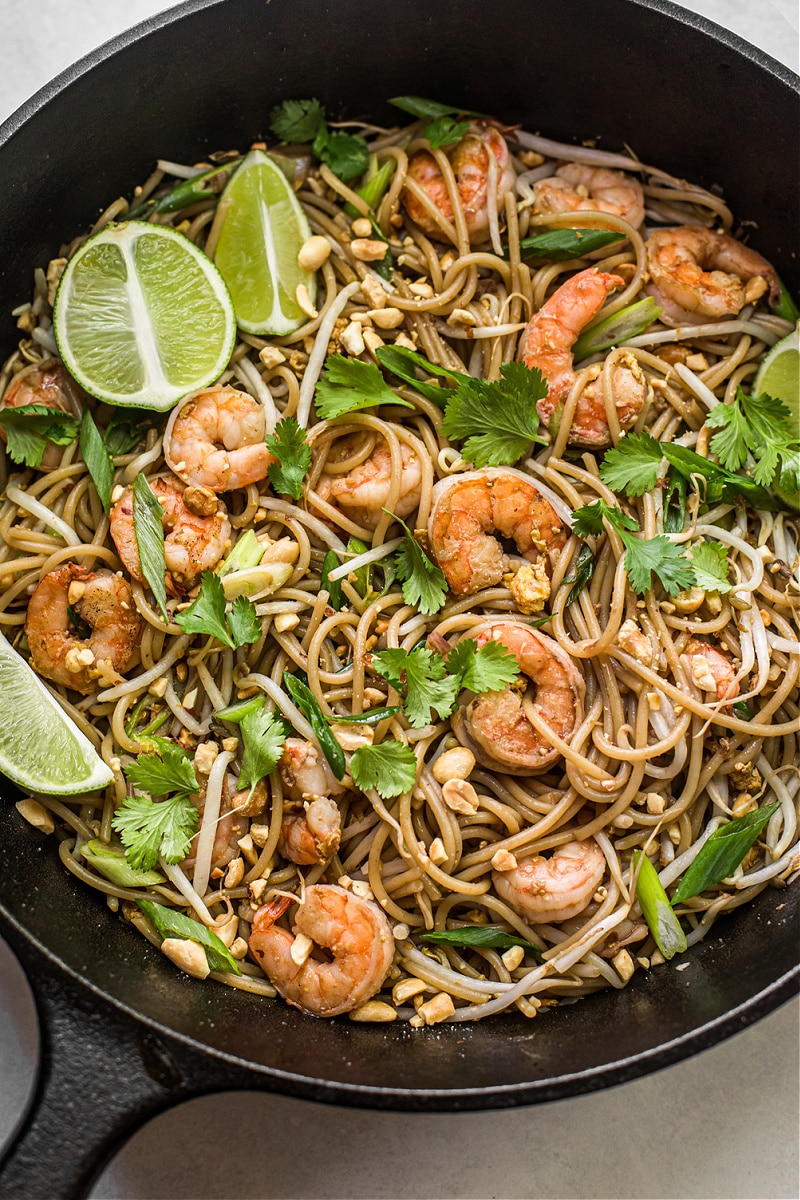
My very favorite recipe for Pad Thai comes from Cook’s Illustrated. I adapted their recipe a bit to make it gluten-free or grain-free. For a gluten-free option, I recommend using Jovial gluten-free spaghetti. For a grain-free option, use spiraled yellow squash.
I used palm shortening in this recipe because it has a neutral flavor, is a healthy fat and can withstand high heats. I buy palm shortening from Tropical Traditions because they purchase from a sustainable farm. You can also use lard for an animal fat option.
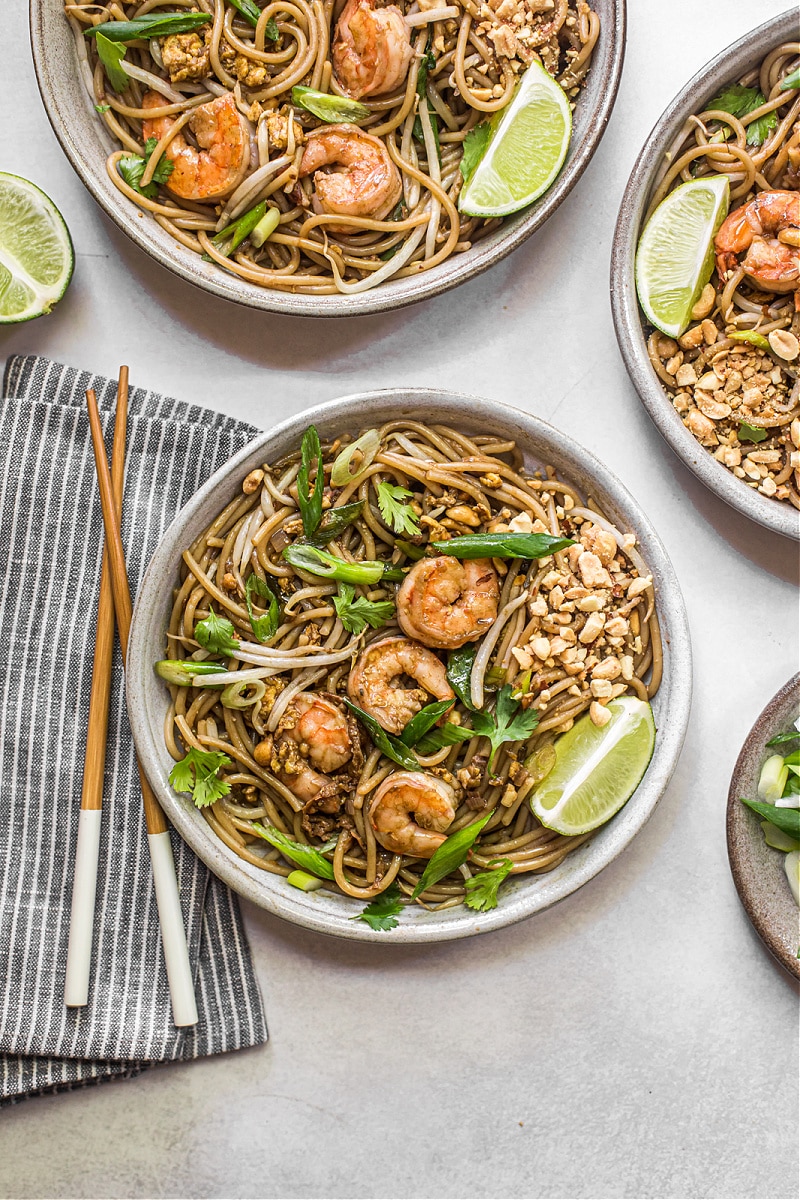
Next time, skip the take-out and whip up a batch of homemade Pad Thai. The flavors are vibrant and it’s a much healthier option!
PrintPad Thai Recipe (Gluten Free)
To stretch the shrimp a bit further, I like to cut the shrimp in half lengthwise. Adapted from Cook’s Illustrated.
- Prep Time: 25 minutes
- Cook Time: 20 minutes
- Total Time: 45 minutes
- Yield: Serves 6
- Category: Main Dish
- Method: Sautéing
- Cuisine: American, Thai
- Diet: Gluten Free
Ingredients
For the Sauce:
- 2 tablespoons tamarind paste (or 1/3 cup water combined with 1/3 cup lime juice)
- 3/4 cup boiling water (omit if using lime and water mixture)
- 3 tablespoons fish sauce
- 1 tablespoon coconut vinegar
- 2 tablespoons raw honey
- 1/4 teaspoon cayenne (you can add more if you like it spicy)
- 4 tablespoons palm shortening, divided
For the Stir-Fry:
- 2 large eggs
- 1/4 teaspoon Celtic sea salt
- 12 ounces medium shrimp, peeled and deveined
- 3 cloves garlic, minced
- 1 medium shallot, minced
- 8 yellow squash cut into noodles with a spiralizer or julienne peeler. Or, if you'd like to use pasta, I recommend Jovial gluten-free spaghetti
- 6 tablespoons chopped unsalted peanuts (omit for Paleo)
- 3 cups bean sprouts
- 5 scallions, sliced thin at an angle
- 1/4 cup fresh cilantro leaves, chopped
- Lime wedges (omit if not using tamarind)
Instructions
- Place tamarind in a bowl and cover with boiling water. Let sit for 10 minutes, then strain through a fine-mesh sieve. Stir in fish sauce, vinegar, honey, cayenne and 2 tablespoons shortening (the shortening might clump but will melt when added later to the pan).
- Beat the eggs and 1/8 teaspoon of sea salt in a small bowl.
- Heat a 12-inch skillet over medium-high heat for 2 minutes. Add 1 tablespoon of palm shortening and swirl the pan to coat. Add the shrimp and sprinkle with the remaining 1/8 teaspoon of sea salt. Cook, stirring occasionally, until shrimp are opaque and browned about the edges, about 3-4 minutes. Transfer the shrimp to a plate and set aside.
- Remove the pan from the heat and add the remaining palm oil and swirl to coat. Add the garlic and shallot to the pan. Set the skillet over medium heat and cook, stirring constantly, until the garlic and shallots are light brown, about 2 minutes. Add the eggs to the skillet and stir vigorously with a wooden spoon until scrambled and still a bit moist, about 20 seconds. Add the squash noodles to the pan and pour fish sauce mixture over noodles. Increase the heat to medium-high and toss constantly until noodles are hot and coated with the sauce. Stir in 1/4 cup peanuts, sprouts, all but 1/4 cup scallions and cooked shrimp over noodles. Toss to combine. Serve immediately with remaining scallions, peanuts, cilantro and limes (if using).
Your pad Thai recipe should say to use either lime or tamarind. Both would be too sour.
It says this in the ingredient list as well as in the instructions.
This looks yummy, but what about the crispy orange chicken? I can’t wait for that one, too! :o)
It’s coming! 🙂
Lovely!
Yum. Looking forward to this one. What can be used in place of palm shortening?
You can use coconut oil, but you’ll need to lower the stove temperature and lengthen out the cooking time.
I LOVE pad thai!! I’m thinking about going grain-free, or at least starting to ease out of them. Can you tell me about the texture and flavour of these “noodles”? I ate spaghetti squash today with my bolognese. It’s just so sweet compared to rice noodles (I’m gluten, dairy free), I don’t love it. The texture doesn’t bother me too much. I’m just curious what I can expect (btw, love your blog so much and your inspiring journey recovering from Hashimoto’s). Does the type of spiralizer contribute to a better texture? Thank you Carrie!!
I’m with you on the spaghetti squash. It’s ok in some dishes, but in other’s – not so much. I LOVE using the yellow squash for “noodles”! The texture is as close to noodles as you can get and it has a completely neutral flavor so it picks up what ever flavor is in the dish. I know the spiralizer is an extra gadget, but if you’re thinking about going grain-free, it’s a well-spent $28! I use mine all the time. 🙂
Yellow squash – like butternut squash? or like the one that looks like zucchini but yellow?
BTW, totally buying the spiralizer on your recommendation – looking forward to it!
And thank you for taking the time to answer my questions, excited to test it all out 🙂
You’re welcome! Yellow squash (the one that looks like zucchini, but yellow). 🙂
Amazing recipe!!! Made this tonight for dinner except with chicken. Didn’t have cilantro but it didn’t matter. Thanks again for your hard work and exceptional recipes!
I’m so glad you all enjoyed it! I appreciate the positive feedback! 🙂