Last Updated on September 10, 2026 by Deliciously Organic Editor
I’ve been making homemade kombucha for about two years now and the whole family loves it. If you’re not familiar with kombucha, it’s a sweet, fermented, effervescent tea full of probiotics and properties which stimulate the liver to discard toxins. It’s much more economical to make kombucha at home than buying it in stores.
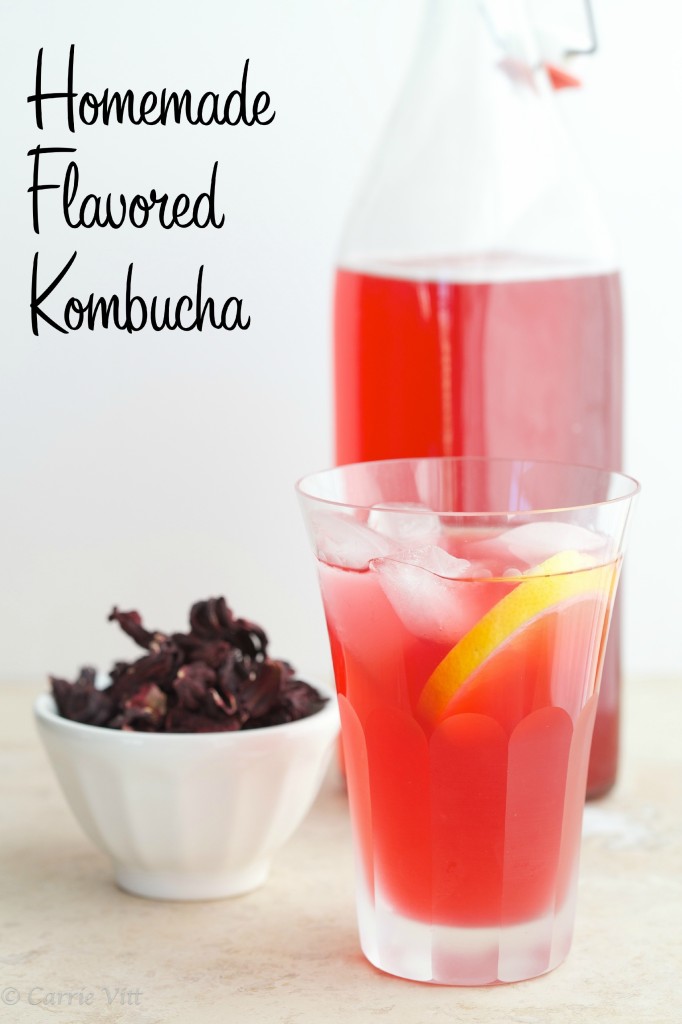
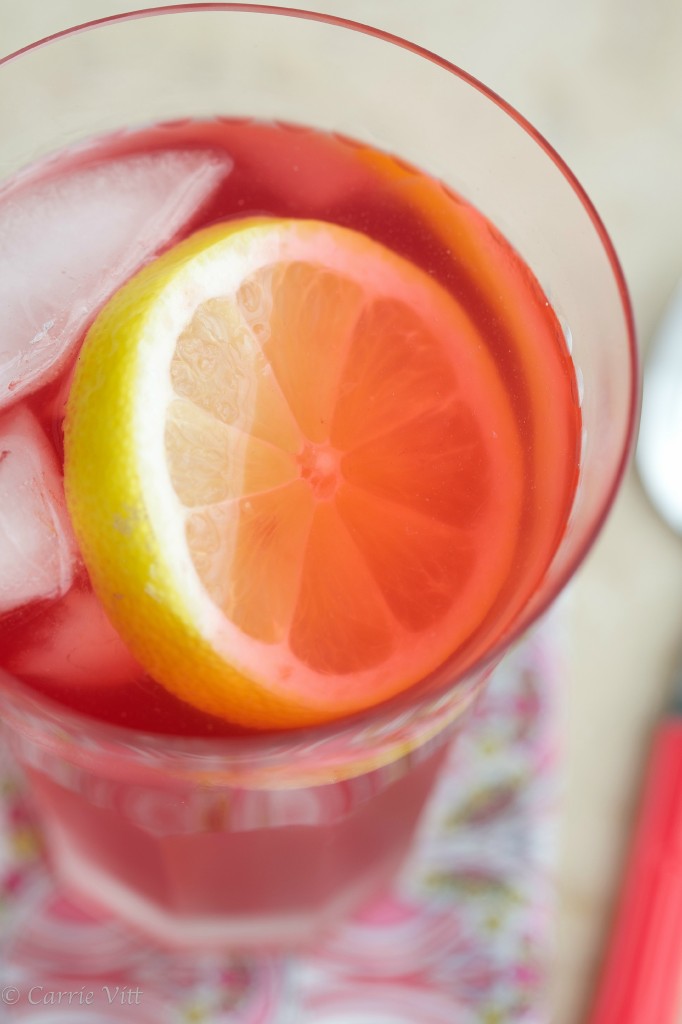
I started experimenting with flavored kombucha and found it really quite simple. Instead of adding the flavored tea at the end, I like to add it at the beginning. Our favorite flavored tea is hibiscus, so I’ve been adding 1/4 cup dried hibiscus to the hot water along with the other tea bags. It gives the tea a pretty pink color and wonderful flavor.
The whole process might sound a bit scary, but I assure you, there’s nothing to be afraid of. Boil the water, add your sweetener and tea bags, let it cool, pour the mixture into a large pitcher and add the scoby. After 8 days, you have homemade flavored kombucha!
Here are a few items you need to get started:
Starter Culture
A large jar to store the kombucha while it ferments
A couple of glass bottles to store the brewed kombuchaOr, if you prefer to have it all sent to you in one package, then I recommend the Kombucha Starter Kit that comes with everything you need to get going!
What’s your favorite flavor of kombucha? Please share links and recipes!
PrintHomemade Flavored Kombucha

While I don’t use white sugar in my cooking or baking, the experts over at Cultures For Health say it is required for kombucha and it should not be replaced or substituted. During fermentation, the white sugar reacts with the tea and kombucha culture to produce acetic, lactic and glucuronic acid.
Adapted from Nourishing Traditions
- Prep Time: 10 minutes
- Cook Time: 10 minutes
- Total Time: 7-10 days
- Yield: Makes about 3 quarts
- Category: Drink
- Cuisine: American
- Diet: Gluten Free
Ingredients
- 3 quarts filtered water
- 1 cup organic white sugar (evaporated cane crystals)
- 4 organic green tea bags
- 1/4 cup dried hibiscus (or your favorite loose-leaf tea)
- 1/2 cup kombucha from a previous culture (go to your natural foods store for this, or if you purchase the the scoby I've linked to below, the kit will come with 1/2 cup of kombucha to get you started)
- 1 kombucha scoby or starter culture
Instructions
Boil water in a large pot. Add sugar and stir until dissolved. Remove from heat and add the green tea bags and loose-leaf tea. Steep tea until the water has completely cooled. Remove tea bags and pour cooled liquid through a sieve (to remove the loose-leaf tea) into a 4 quart or larger glass bowl (not plastic). Stir in 1/2 cup kombucha and place the scoby on top. Cover loosely with a clean cloth or towel and transfer to a warm, dark place. Let mixture sit for 7-10 days (I’ve found that in the warmer months, 7 days is perfect. In the colder months, I let it ferment for at least 8-9 days). When the mixture is ready, the scoby will have grown a spongy pancake and the tea should be slightly sour and fizzy. Remove the scoby and store it in a glass container in the refrigerator until you’re ready to use it again. (After your first time making kombucha, the scoby will have grown a second spongy pancake. This can be used to make other batches or you can give one away to a friend.) Pour kombucha into glass jars or a pitcher with a tight-fitting lid. Store in your refrigerator.
Interesting! I have never heard of doing it this way.
I flavour my kombucha by brewing it black, then adding fruit when I bottle it after fermenting, I leave the bottled kombucha at room temp a couple more days before I refrigerate it and the flavour and fizziness are excellent. However… this would be much easier and all ‘one step’!
I love brewing my own homemade Kombucha it is SO delicious and SO much more economical. You can brew an entire gallon for less than $1.50 which is such huge savings, compared to more than $30 for the same amount purchased via 16 oz bottles at the whole foods market.
Thanks for sharing, Carrie! I always enjoy your inspiring posts, Kelly
That’s quite the price difference!
Oops, I meant two-gallons of Kombucha (via 16oz bottles) is about $30 – but yes, purchasing it costs a whole lot more. 🙂 Thanks, Carrie!
One gallon of water, 1 1/2 cups organic cane sugar, eight organic tea bags, 1/4 cup apple cider vinegar. How does this add up to $15?!? $1.50 was definitely closer.
My favorite flavor is ginger. I let my kombucha ferment for 3 weeks then pour into swingtop bottles, add fresh grated gingerroot, and allow to ferment on the counter another 2-3 days. It’s like a super fizzy gingerale. I also like the hibiscus ginger flavor you can find in stores, so I am going to take your advice and use hibiscus tea next time.
Great idea! I’ll have to try adding fresh ginger root!
I forgot to mention that I strain out the ginger before drinking. And I also love adding the juice of a grapefruit with the gingerroot.
My favorite is ginger too, although I don’t strain it out. Have you tried adding dried lavender? We usually make ginger and lavender. Its so good. Maybe a heaping Tbl or 2 per quart of finished kombucha.
When you add the grapefruit juice with the gingerroot do you put it in at the same time – a day or two during the second fermentation and then putting it into the refrigerator? Or do you add the fresh grapefruit juice right before drinking it ?
3 weeks is the length of time it takes to make your own Scoby. Typically when you are making a brew it is 7 to 10 days of fermentation. Why three weeks for you ?
I’ve read that it’s better to use non organic tea than organic tea for these reasons:
From Kelly the Kitchen Cop: You should NOT use herbal, organic or decaffeinated tea. (And never Earl Grey tea! It contains “bergamot”, which is harmful to the Kombucha.) Betsy recommends plain Lipton black tea (“100% Natural”) – Lipton does not use tea brokers or middlemen. (They’ve owned their own plantations for over 200 years – this is important because all green and black tea is grown outside the U.S.) She tells me that Lipton tea is never sprayed with pesticides, so it is organic without the organic label. (Although they now sell black and green tea labeled “organic”, but at the store I see they are the exact same price.) Because of how most organic or decaffeinated tea comes into the U.S., it usually isn’t really organic (50% are sprayed with pesticides at customs as a precaution), and this can cause the Kombucha to mold..
Have you heard this or know if it holds any merit?
Thanks!
I’ve read that also, but the ladies at Cultures for Health have a different opinion. http://www.culturesforhealth.com/kombucha-ingredients As far as black tea goes, it doesn’t make sense to me to not use organic. The difference is pesticides and possible “natural flavors” or “soy” added to the tea, so I don’t see any reason not to use organic black tea. That’s an interesting statement about how the teas are sprayed at customs. I’ll have to look into that and read up on the topic.
Here is the Cultures for Health answer to the green tea question: “Green teas are commonly mixed with black teas for brewing Kombucha but can also be used alone. While not quite as ideal as black tea for fermenting Kombucha, Green Tea provides most of the necessary nutrients and can be used in combination with black or herbal teas. Green teas tend to yield a lighter color, softer tasting Kombucha. Jasmine green tea makes a particularly tasty Kombucha.”
I made kombucha for a long time with only black tea and since switching to green and herbal teas, it still has the same slightly sour taste, the scoby always grows a second, and it’s nice and effervescent, so I haven’t noticed any change in the quality of the flavored kombucha.
Ok, thanks! That’s helpful to know!
I use a mix of organic black and green teas all the time and have not had any negative results, either. Vitacost has great prices on the organic teas.
Love this Carrie! I’ve been brewing a continuous brew for almost a year. I JUST this week decided to bottle some and flavor it. Awesome!! I use a glass jar with a plastic spigot, super easy to just pull a cup off every morning. Now, how about kefir water? 🙂
Amy,
We brew Kombucha here and also water kefir… so if you are interested, you can check out my post on it…
http://www.greenandgrateful.com/2011/04/what-is-all-the-hype-about-kefir/
And thanks Carrie for this post! A friend of mine brews with hibiscus as well and I LOVE the color! So festive, especially for spring and summer, or to bring some sunshine to dark winter days! 😉
I can’t wait to try this. Have you ever tried sweetening with honey or maple syrup instead? Or do you know if it would fail with either? Thanks!
There is another SCOBY called Jun which uses green tea and honey to ferment instead of black tea and sugar like kombucha. I brew both. Look them up online.
Niki, don’t use raw honey. Its anti bacterial which is not what you want when the point is to drink I very live drink. I’m a beekeeper so I have lots of raw honey around, but don’t use it for Kombucha (I’ve been making and drinking it for years). If you use store-bought honey you can use it since most of it has been pasteurized in the filter process. It’s essentially a “dead” sweetener at the point, so if you just like the flavor you can use it. I make kombucha with 4 c. water, 1 c sugar, 3 black tea bags, and 2 green. I usually make 7 gallons at a time so I just multiply that out. I also leave the tea in for 10 min. which is a little longer than some, but its not bitter, just stronger flavored.
with the Jun you can use raw honey!
don’t you mean 4 quarts and not 4 cups of water?
The recipe calls for 3 quarts of water.
I always learn something new when I read your blog. This sounds great and worth the wait!
Fogive me if this is a repeat question. Is there any way to make Kombucha with something besides tea. With interstitial cystitis, my bladder cannot tolerate any caffeine.
Here is the answer to your question from Cultures for Health: “If caffeine is a concern, try using decaffeinated tea or use this method to bypass most of the caffeine: Prepare a cup of hot water along with your container of water for making Kombucha. Allow your tea to steep in the cup of hot water for 30 to 60 seconds prior to placing the tea in the container to make tea for your Kombucha. Discard the cup of water. Approximately 80% of the caffeine is released in that first minute of steeping.”
I should have expounded more that it’s not just caffeine. Tea, whether caffeinated, or not, green or black, or herbal, all irritate this sensitive bladder. Although, I’ve seen incredible improvement going gluten free.
As far as i’ve heard Kombucha can only be made with green or black tea. If you want something with similar benefits you could try kefir (water or dairy kefir).
Thanks for this post, Carrie. Kombucha is something I’ve wanted to try but have been scared.
How long will a batch keep in the fridge?
I have a good friend who is obsessed with Kombucha!! I am totally passing this on to her- she will love how to make her own!
I love raspberry and my new favorite is a combination is grapefruit and sage!
I love my kombucha with grated apples, or with pommegrante! Delicious in the second ferment. My husband likes brewing coffee kombucha instead of tea… variations are endless
Wow! Coffee Kombucha? Never heard that one! How does he do it?
Here is where we found the recipe Alyssa!
http://www.culturedfoodlife.com/coffee-kombucha-and-cold-kombucha-latte/
Barbara – what does your husband add to the second fermentation or does he bottle straight from the first? And does it turn out fizzy? I am so excited to try this!
I’ve just started making kombucha and my first batch wasn’t fizzy (but it tasted good and we drank it). I’m wondering what I might have done wrong?
Laura, I find tha fizziness depends on Scoby activity. Sometimes mine is fizzy and sometimes not. It is always more fizzy if I bottle it after brewing and add fruit. If you have a new baby Scoby and the kombucha doesn’t taste like sugar tea anymore, you are still getting kombucha tea.
The air temperature makes a bit difference. In the summertime, my kombucha is more fizzy than in the winter. I also let it ferment a few extra days in the winter time since the temperature is a bit cooler.
I definitely want to try this… I have never had one that I could drink before, the flavor was just too strong and “offensive” for me. But this looks and sounds like it would be delicate and wonderful!! Cant wait. 🙂
Some brands are very strong, but this one has very light flavors. I think you’d like it! 🙂
I agree with Amanda, I haven’t heard the best things about the store bought variety but am curious to try it at home!
definitely love your kombucha!! always such a TREAT! I keep killing mine. poor, kombucha.
If it isn’t stored in an airtight bottle like yours, does it lose its “fizz” like soda does?
We never bottle and refrigerate ours, we leave it on the counter with part of a scoby in it. It doesn’t lose it’s fizz that way. We continuous brew in a 2 1/2 lead free crock.
You make me want to get over my fear of making kombucha and do it already! Thanks taking all the time to learn how to make this delicious beverage!
Seriously considering trying to make some . . . I have glass containers like you show in your link, but doesn’t it make a huge scoby? Is this ok?
The scoby will grow as large as the diameter of your jar. So, as long as the jar is large enough to hold all of the liquid, it’s fine.
I love hibiscus, green tea, and kombucha so I’m definitely trying this out. Thanks, Carrie!
so i’ve been doing my research and i’ve read some people say that it’s kinda finicky or they kill it… this might be obvious for some, but, how do you know it’s bad or that it’s dead? (i mean, i’m reading that sometimes it’s fizzy and sometimes it’s not due to temps…)
Cultures for Health says that if it has any black or moldy spots, or smells “bad” then it’s best to discard and start again. Here’s a link to one of their pages where they feature many articles about making kombucha. http://www.culturesforhealth.com/kombucha
Carrie, This recipe looks awesome and I am sure it is. I really want to start making my own kombucha but I am nervous . I buy mine now but would love to make it instead. I am confused about this part of your recipe. — .5 cup of kombucha from previous culture. Can you clarify for me. My natural food store only sells pre made kombucha, no cultures are sold.
One more question, what is a mother vs baby scoby?
Thanks a bunch!
“Kombucha from a previous culture” is simply fermented kombucha. So you can use a bottle of kombucha from your health food store to get you started. When you put the scoby in the liquid to ferment, it will grow a second scoby. The original scoby is the “mother” and the new small scoby on top is the “baby”.
Is Kombucha ok for someone with candida sensitivity?I eliminated processed sugar 3 years ago to rid my body of an overrun of candida. Sure don’t want to risk it returning, thanks.
Here is a helpful website for your question: http://www.kombu.de/candida.htm
I haven’t read much about that specific topic but Sarah at Healthy Home Economist wrote a great post on this topic: http://www.thehealthyhomeeconomist.com/can-candida-sufferers-drink-kombucha/
I use five organic black and three green or flavoured. I always use SOME black though as that is what original kombucha was. It has more nutrients and the black is necessary for the detox.
But including some green tea makes a great flavour. I get all my organic teas at vitacost.com for a great price and free shipping. We buy the St. Dalfour.
How long can you leave the scoby in the fridge before making the next batch?
Also, my first batch tasted like pure apple cider vinegar. Any ideas, hints, suggestions?
Thanks for all you do on your blog and helping us eat healthier. I appreciate it!
You don’t have the leave the scoby in the fridge for any certain period of time before making the next batch. For the first batch – did you reduce the sugar at all? I’ve noticed that if the temperature is very warm in my kitchen that my kombucha will ferment more quickly. Was the temp in your kitchen warm this week?
So does the sugar in a sense evaporate or become reduced? Or do you end up taking in 1C worth of sugar — that doesn’t seem too healthy?
The scoby feeds off the sugar in order to ferment. When the kombucha is ready to drink, there is about 2g of sugar per 8 ounces of kombucha.
Carrie, I left my Kombucha scoby: mother & baby on the counter with some tea in a jar for several days.
Is it still ok ? It does not stink. It smells tart & vinegary. I did not realize that I needed to refrigerate before making more tea again. Also loved this Hibiscus tea recipe. It was ready in 7 days & put it in fridge & a week later it taste & smells like alcohol. What did I do wrong. Thank you.
It should be fine. The tea in the jar probably fermented a bit, but as long as it smells fine it should be ok. For the kombucha that you brewed, was it particularly warm in your kitchen when it brewed? It could have brewed too long. In the summertime I cut my brewing time back by about 2 days. You might also want to look at http://www.culturesforhealth.com and see what they have to say.
Ive been brewing my own kombucha for almost a year..Best thing that Ive done..
Im wondering what you think about flavoring the homebrew with Torani syrups when bottling?
I’m glad you’ve enjoyed brewing. I love coming up with different combinations! 🙂 Flavoring with Torani is a good idea, but that product is made of processed ingredients and is very high in sugar, so it’s not something I’d recommend. A healthier alternative would be raw juice or crushed berries.
I boil 1 gallon of distilled water in a stainless steel pot with a lid, I add 4 teaspoons of Thai Moutain Oolong tea from Teavana, and a little over 1 cup of pure maple syrup. I let it sit overnight and then remove the tea leaves with a strainer and pour the tea into a sauerkraut crock, add my scoby from the last batch (or one that I’ve purchased from someone), then cover with a cotton dishtowel and let it sit for 7 to 10 days. I then use a glass liquid measuring cup and a stainless steel funnel to pour the kombucha into glass bottles with ceramic stoppers with a rubber seal and metal clasp. Sometimes I ferment a little ginger and add it with lemon and pineapple and let the bottle sit for a few more days for a ginger ale tasting drink.
I’m a regular drinker of Rise Hibiscus & Rose Kombucha, but it is very expensive and I thought I’d try to make my own. This recipe tastes great until it ferments, and the it just tastes like vinegar without the fizz. Any tips on what I’m doing wrong?
If it tastes like vinegar, then it has been fermenting too long. I find that in the summer months my kitchen is warmer, so I only ferment the kombucha for about 5-6 days. In the winter I ferment for 8 days. I hope that helps!
Looking into trying this, but was wondering – can you use organic stevia instead of the sugar?
The tea and scoby need sugar for the fermentation process. Without it, it won’t ferment. When the kombucha is ready, there is about 2 grams of sugar per 1 cup.
Can Kombucha be made in the winter months when we turn our heat down at night to 60 degrees? Thank you.
It can, but I find that I need to let it brew longer (about 8-10 days).
I added 1/2 cp of GT’s Hibiscus Kombucha instead of non flavored Kombucha to my cooled down black tea batch? I have not added my scoby yet. Is it okay to add the scoby or should I toss it and start over?
It will be fine. Add the scabby and you’ll be good! 🙂
Hi Carrie…I just found your web site today….awesome! I haven’t read through all the comments yet. I have made 3 batches of plain, unflavored Kombucha. It’s….um…ok, but not great. I love the Kombucha they sell at Whole Foods but I will not spend $3 or $4 for a bottle! Plus I have to drive 45 minutes to get to a Whole Foods. Have you found a good source for more flavored recipes? My sis-in-law buys a quart for $8 from an individual at Trader Joe’s, but I know we can make it for so much less! (Obviously a great business) 🙂 Her last batch was grapefruit blueberry. I’m also interested in the continuous brew, if you have any good sources for that. Thanks!
Do I need to check back here to know if you reply? Or will I be notified?
Hi, Carrie! I have been wanting to make Kombucha for some time now, but my concern has been how do I cover it with a cloth loosely for a week without attracting bugs?? Maybe it seems like a simple question, but I live in NYC where bugs are rampant. What is the best way to properly handle this concern? Any suggestions are helpful. Thanks!!
A rubber band put around the rim of the jar and over the cloth is a good idea. That way bugs and other critters can’t get inside.
Carrie,
Thank you for the information. A friend of mine made kombucha, and added 2 tablespoons of this juice– R.W. Knudsen Organic Apple Juice–when fermenting. I have never heard of doing this. Do you know anything about doing something like this? Thanks.
In some of my research I read that if the acid level is too strong it will kill the probiotics of the tea. My question is that during the second brewing step where the scoby is already removed and fruit/juice/lemon/herbs etc are added to the tea and allowed to ferment another few days, won’t lemon and grapefruit juice cause the tea to become more acidic and kill off the probiotic properties? How much lemon/grapefruit juice is too much? At what acid level are the probiotics destroyed and what is the acid level of lemon kombocha tea?
I am brewing a batch of Hibiscus Kombucha. My SCOBY is turned a bright pink color. Can I still use that for black tea kombucha? Or do I have to only use hibiscus with that scoby?
Yes, you can still use it for black tea kombucha. My scoby also turned pink from the hibiscus and then I used it for black tea kombucha and it worked just fine. 🙂
Hi there!
So I am making Kombucha and bought a Hibiscus Peach tea. I’ve heard conflicting things about herbal tea, so I wanted to make sure I didn’t ruin it!
As long as you use a caffeinated tea (like the green tea listed in this recipe) along with the herbal tea, then you should be good to go. 🙂
I tried making kombucha a few years ago. Every one molded. I then read that using a scoby that needs to be re-hydrated can allow mold to grow. You should be using an already moist scoby, NOT one that requires you to re-hydrate it. I have since redone my foundation, and am ready to begin again and try making kombucha.
also, trying it in SUMMER as opposed to winter to see if that makes a difference.